


What Is Clinical Governance in NHS Trusts?

The 7 Pillars Explained for Board‑Level Assurance
Clinical governance is a framework used in healthcare to ensure that high standards of care are delivered, maintained and continuously improved. Within NHS Trusts, it plays a central role in patient safety, quality improvement, regulatory compliance and board assurance.
Introduced into the NHS in the late 1990s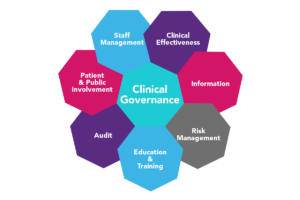 , clinical governance brings together quality, safety, risk, learning and accountability into a single, coherent system. It helps NHS organisations demonstrate that they are safe, effective and well‑led — not just in theory, but in day‑to‑day practice.
In this guide, we explain:
- What clinical governance means in an NHS Trust context
- The 7 pillars of clinical governance, with NHS‑relevant examples
- How clinical governance supports Trust Boards and executive oversight
- Common governance challenges faced by NHS Trusts
- How digital systems can support effective clinical governance
What Is Clinical Governance?
Clinical governance is a systematic approach to improving patient care and safeguarding standards across healthcare organisations. Rather than being a single policy or process, it brings together multiple governance activities into a joined‑up framework.
In NHS Trusts, clinical governance ensures that:
- Patient safety risks are identified and managed
- Quality of care is monitored and improved
- Learning from incidents and feedback leads to measurable change
- Boards have confidence in the information used for oversight and decision‑making
At its core, clinical governance answers a critical board‑level question:
How do we know our patients are safe and our services are improving?
Why Clinical Governance Is Critical in NHS Trusts
For NHS Trusts, clinical governance underpins organisational accountability. Trust Boards are collectively responsible for ensuring that systems and processes are in place to deliver safe, high‑quality care and meet regulatory expectations.
Effective clinical governance supports:
- Board and executive assurance
- Consistent reporting through Quality Committees
- Transparency and learning rather than blame
- Readiness for inspection, review and scrutiny
When governance processes are fragmented or heavily manual, Trusts often struggle with:
- Limited visibility across risks and incidents
- Inconsistent reporting across services
- Delays in providing assurance to boards
Strong clinical governance helps address these challenges by creating structure, clarity and confidence.
The 7 Pillars of Clinical Governance (NHS Context)
The clinical governance framework is built on seven interconnected pillars. Within NHS Trusts, each pillar contributes evidence that supports assurance, oversight and improvement.
1. Clinical Effectiveness
Definition:
Ensuring that clinical care is evidence‑based and delivers the best possible outcomes for patients.
In an NHS Trust, this involves:
- Monitoring quality indicators and outcomes across services
- Reviewing adherence to national guidance and standards
- Identifying unwarranted variation in care
Why it matters at board level:
Clinical effectiveness provides assurance that patients are receiving appropriate, high‑quality care and that services are improving over time.
2. Risk Management
Definition:
Identifying, assessing and reducing risks to patient safety, staff and the organisation.
In an NHS Trust, this involves:
- Capturing incidents and near‑misses
- Understanding risk themes and trends
- Ensuring risks are escalated and controlled appropriately
Why it matters at board level:
Trust Boards rely on accurate, timely risk information to maintain oversight and confidence in safety controls.
3. Patient and Public Involvement
Definition:
Engaging patients and the public in shaping, reviewing and improving services.
In an NHS Trust, this involves:
- Reviewing patient feedback, complaints and compliments
- Using experience data to inform improvement work
- Being open and responsive when things go wrong
Why it matters at board level:
Patient insight complements performance data and strengthens accountability and transparency.
4. Clinical Audit
Definition:
Systematically reviewing clinical practice against agreed standards.
In an NHS Trust, this involves:
- Delivering structured audit programmes
- Tracking findings and action plans
- Demonstrating learning and improvement
Why it matters at board level:
Audits provide tangible evidence that standards are monitored and gaps are addressed.
5. Staff Management
Definition:
Ensuring staff are competent, supported and working within professional standards.
In an NHS Trust, this involves:
- Oversight of workforce compliance and competence
- Monitoring staffing‑related risks
- Supporting staff wellbeing and engagement
Why it matters at board level:
Safe care depends on a skilled and supported workforce. Boards require confidence that staffing risks are understood and managed.
6. Education and Training
Definition:
Ensuring staff have the skills and knowledge required to deliver safe, effective care.
In an NHS Trust, this involves:
- Tracking mandatory and role‑specific training
- Identifying gaps and emerging risks
- Supporting continuous professional development
Why it matters at board level:
Training data contributes directly to assurance around capability, compliance and patient safety.
7. Information Management
Definition:
Managing clinical and governance data accurately, securely and effectively.
In an NHS Trust, this involves:
- Ensuring data is reliable, timely and consistent
- Supporting integrated governance reporting
- Enabling visibility from frontline teams to Trust Boards
Why it matters at board level:
Without accurate information, meaningful oversight and assurance are not possible.
Clinical Governance in Practice Across NHS Trusts
Clinical governance applies across all areas of an NHS Trust, though the focus may vary:
- Acute and Specialist Services: Emphasis on risk oversight, audit outcomes and board assurance
- Community and Mental Health Services: Strong focus on learning cultures, risk management and continuity of care
- Trust‑Wide Governance: Integrated reporting to Quality Committees and Boards
Across all settings, the goal remains the same: safe, effective and continuously improving care.
Common Clinical Governance Challenges in NHS Trusts
Many NHS Trusts face similar governance challenges, including:
- Governance activity spread across multiple systems
- Manual, time‑consuming reporting processes
- Limited real‑time visibility at executive and board level
- Difficulty demonstrating learning and improvement
- Pressure during inspection or review periods
Addressing these challenges requires both strong leadership and governance systems that support consistency, visibility and assurance.
How Digital Systems Support Clinical Governance in NHS Trusts
Digital governance systems can help NHS Trusts:
- Centralise governance activity
- Improve visibility across risks, incidents and audits
- Reduce reliance on spreadsheets and manual processes
- Provide timely, consistent reporting to boards and committees
By bringing governance information together, Trusts can spend less time compiling reports and more time focusing on improvement.
How Radar Healthcare Supports Clinical Governance in NHS Trusts
Radar Healthcare supports NHS Trusts by providing centralised visibility across clinical governance activities, helping leaders move from fragmented reporting to joined‑up assurance.
Our platform supports:
- Risk management and incident reporting
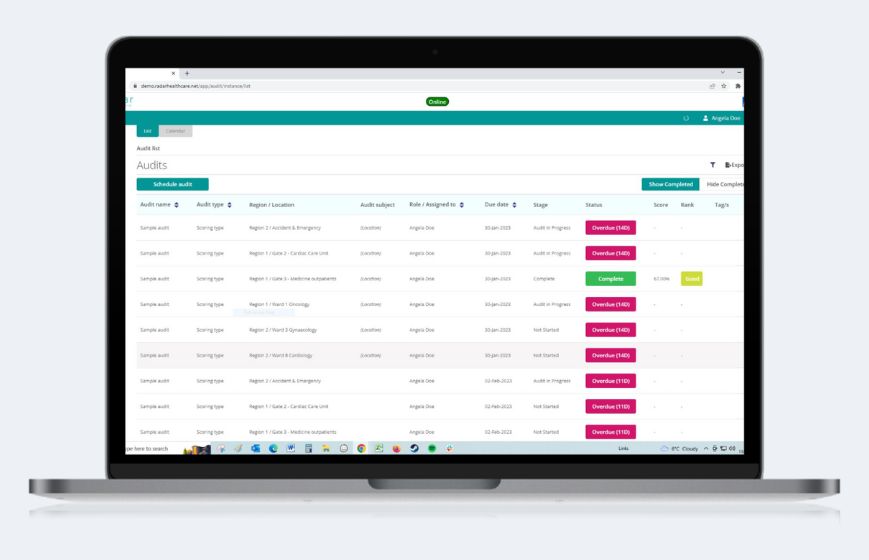
- Clinical audit delivery and tracking
- Workforce compliance and training oversight
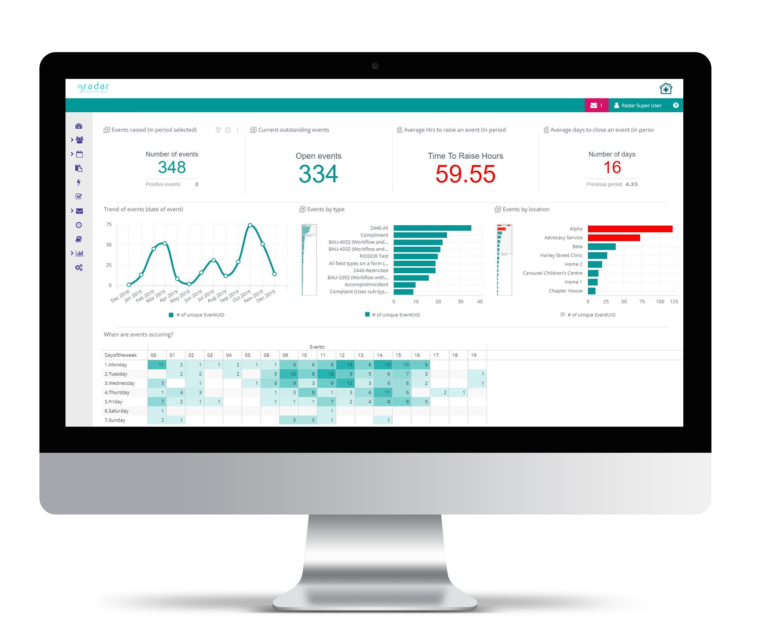
- Real‑time analytics and reporting
By supporting governance at operational, executive and board levels, Radar Healthcare helps NHS organisations improve confidence, reduce administrative burden and deliver safer care.
"Radar Healthcare has saved us 4 hours every month on clinical audits, with the added benefit of no admin help being required, meaning we can focus more time on providing care."

Clinical Governance FAQs
Clinical governance is a framework that ensures healthcare organisations continuously improve quality and patient safety.
They provide a structured approach to overseeing quality, safety, staff competence and patient experience.
Responsibility is shared across organisations, from frontline teams through to executive leadership and Trust Boards.
No. While it is central to NHS organisations, the principles of clinical governance apply across all healthcare providers.
"We’ve gone from a very huge paper-based care governance committee report to a point where the first part of every meeting is me putting up Radar Healthcare on the screen and going through the last quarter – that’s been really helpful."

Conclusion
Clinical governance is fundamental to delivering safe, effective and compassionate care in NHS Trusts. By embedding the seven pillars into everyday practice, organisations can strengthen assurance, support learning and improve outcomes for patients and staff alike.
Book demo You might also be interested in...
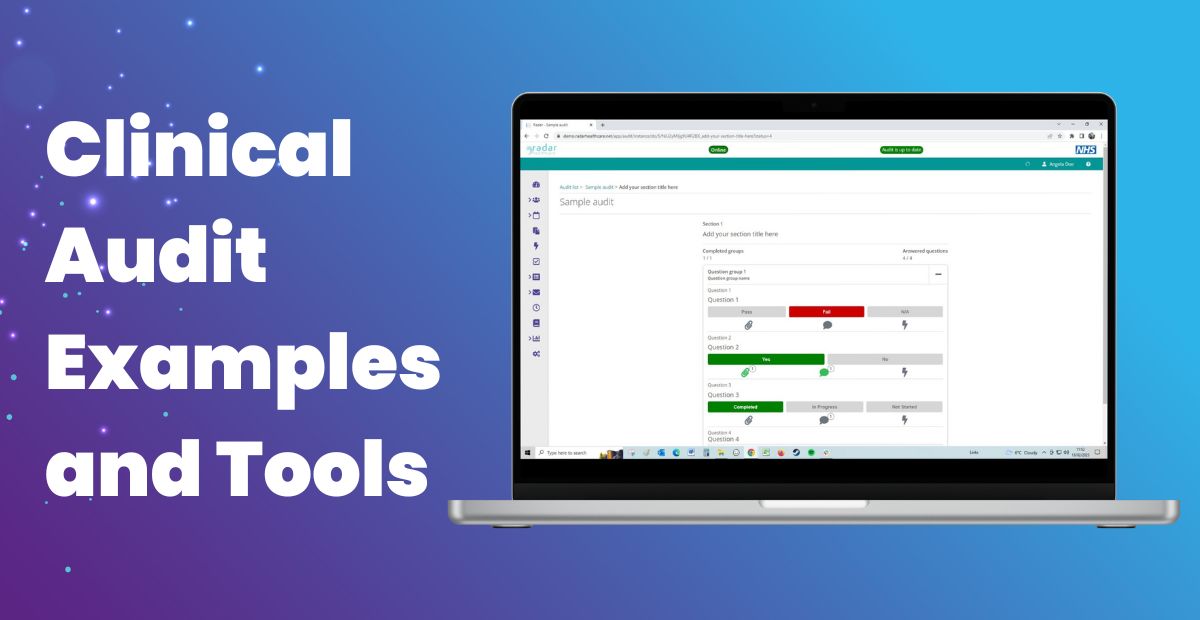
Clinical Audit Examples and Tools for Quality Improvement
Find out moreClinical audits are an essential part of quality improvement in patient care. But how can you ensure that best practices are being followed and that technology is empowering healthcare professionals to improve care outcomes?

Pioneering Patient Safety: Radar Healthcare achieves LFPSE V6 Accreditation
Find out moreJoin us for a Q&A with Jack Forshaw, Project Manager Lead and LFPSE Champion at Radar Healthcare. Jack discusses the journey to LFPSE V6 accreditation, making Radar Healthcare the first approved LFPSE testing supplier by NHS England in the healthcare sector.

Podcast: Changing the Narrative Around Governance
Find out moreIn this episode, Simon Geoghegan, Head of Clinical Data Reporting and Governance Systems for Circle Health Group, talks with our Chief of Partnerships, Rhian Bulmer, discussing the shift in narrative to foster genuine learning opportunities.

North Bristol NHS Trust’s Partnership with Radar Healthcare
Find out moreNorth Bristol NHS Trust has partnered with Radar Healthcare to enhance their quality governance processes, aiming to provide their busy clinical teams with a comprehensive overview of different processes and learning opportunities in one centralised platform.