
Interview with Nicola Kelly, Director of Operations at Peninsula Care Homes
Our partnership with Peninsula Care Homes has given us the chance to work closely with the people who keep their five Devon homes running with care, clarity, and unwavering commitment. Behind every process, policy, and improvement is a team that genuinely wants to make life simpler, safer, and more supported for residents and staff.
One of the key people driving that work is Nicola Kelly, Director of Operations, someone who brings both deep clinical experience and a hands‑on, human approach to quality and reassurance.
To understand how Peninsula strengthens consistency, simplifies processes, and builds confidence across its homes, we sat down with Nicola to explore her role, her values, and her pragmatic approach to embedding meaningful change.
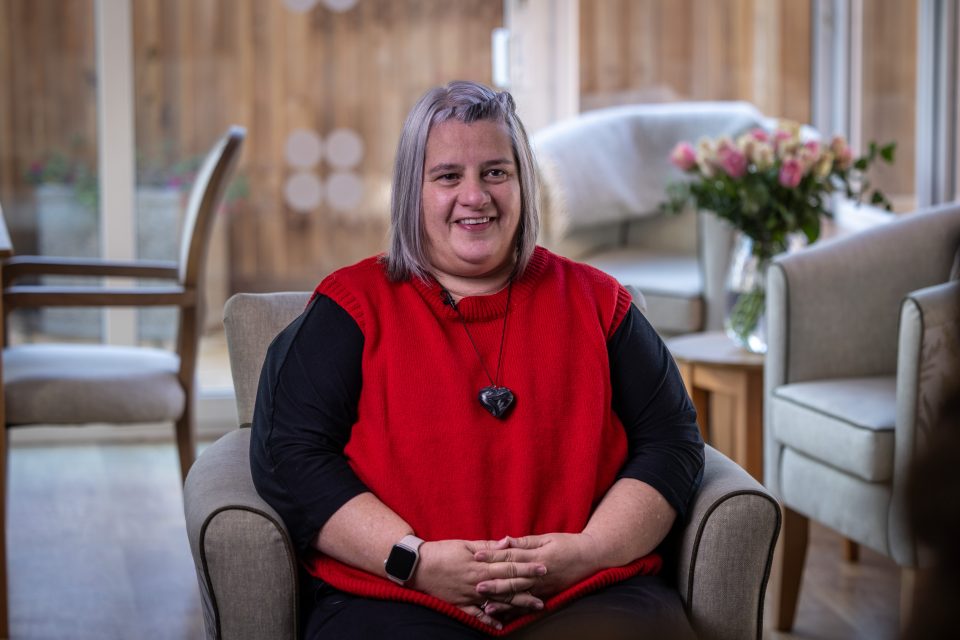
I’m Nicola Kelly, Director of Operations at Peninsula Care Homes, a family-owned business with five homes. My role is a bit tricky to describe, because “Director of Operations” can sound abstract. I like to call myself the Stacey Solomon of care homes. I go in, take everything out, see what’s needed and what’s not, tidy it up, and make life as simple as possible for everyone who lives and works in our homes. My goal is simple: make sure people get home safely.
Everyone has different roles in a care home, and they want to know how I’m supporting them. That’s the easiest way to describe what I do. Unlike Stacey, I don’t have a warehouse to literally reorganise everything instead I do it as we go.
Q: What does that mean day to day?
A: It’s all about going back to basics. I review processes, policies, and procedures: Are staff aware of them? Are they following them? Are they practical? And how can we make them as simple as possible while still meeting regulations and providing great care?
Some tasks are small, like reviewing how staff order food. Others are more complex, like fire risk assessments, training, maintenance checks, or reviewing incidents. A lot of it is reactive: if something happens, I review it, see if it could happen elsewhere, and ensure the correct process is followed. It’s about end-to-end oversight, making sure staff have everything they need to do their jobs well.
Q: You’ve worked in larger organisations. How has that experience influenced your approach here?
A: I started as a carer, became a registered nurse, worked in the NHS briefly, then returned to nursing homes. I eventually became a director in a large corporation with 33 services. While I loved the role, I missed the human connection. Here, in a family business, I get that connection back. I remember my first week: a resident was anxious about using a stair lift, and the team turned it into a fun “roller coaster ride.” Moments like that are why I love working here. I can bring all my learnings from larger organisations to improve processes, while staying close to residents and staff. That’s what makes this role meaningful for me.
Q: Why is reassurance important to you, and how do you achieve it?
A: Quality has three parts: knowing how good we want to be, understanding how well we’re doing, and identifying what to improve. Reassurance comes from oversight: Are staff following procedures? Are incidents handled correctly? Are interventions effective? It’s not about audits in isolation, it’s about consistent, meaningful data. Mistakes happen, but we need to know staff are trained, confident, and learning from each situation.
Q: How did you introduce Radar Healthcare, and why?
A: When I joined, there was a lot of anecdotal feedback about quality, but no clear data. Paper audits weren’t scored, incidents weren’t tracked properly, and oversight was time-consuming. I tried Microsoft Forms initially, but it was still labour-intensive. After six months, I asked the board to invest in Radar Healthcare. I’d used it before, and I knew it could give rapid assurance and oversight.
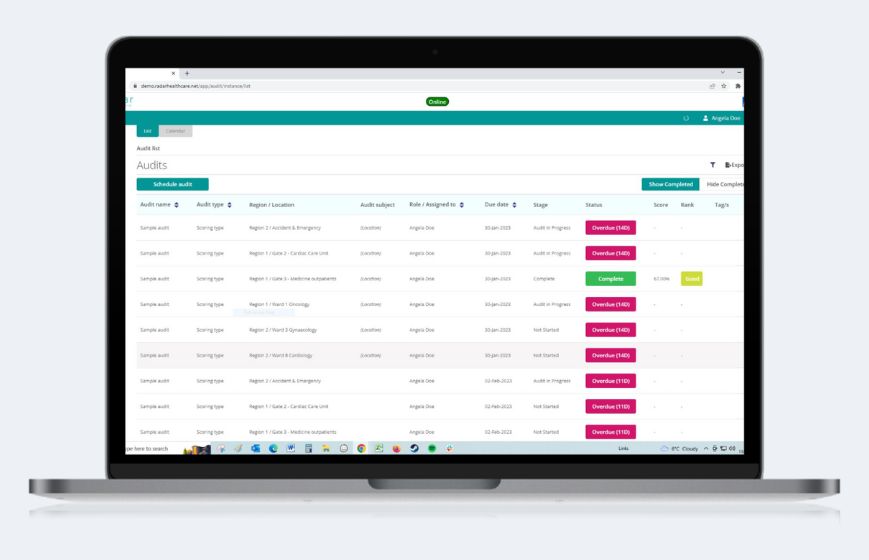
We started with the events module to track incidents and ensure actions were completed. Once the team engaged with that, we added audits, scheduled tasks, workforce compliance, and policies all in one place. Previously, gathering data could take days; now it takes minutes, freeing up time to focus on residents.
One of key elements of the rollout was distinguishing between systems, so, our care planning system was focused on the care being provided, while Radar Healthcare was about compliance, tracking the actions we were taking when things went wrong or incidents occurred, and ensuring we were following the necessary steps. There was really good engagement from the outset, and people were genuinely surprised at how easy it was to use.
Staff are used to handheld devices, so they adapted quickly. I realised they were fully engaged about six weeks in when there was a glitch one morning with Radar Healthcare, and several managers contacted me at 8:30 am, saying they couldn’t see their dashboards. For me, that was a clear sign they were actively using it. The issue was resolved quickly, but it confirmed proper engagement with the system.
Once we had the events module in place and staff could see what was happening in their homes, we began building audits. Our teams are very competitive, and they liked being able to see their monthly improvements. I was very clear with them that if I saw a perfect audit, to me it meant it hadn’t been completed correctly because no one is perfect.
The really great thing is that actions are linked directly to the audits, so staff don’t have to manage separate pieces of work. Everything is connected, and I can follow up to ensure actions are completed.
After implementing audits, we moved on to scheduled tasks, which cover all the routine responsibilities of maintenance staff, housekeepers, and others. The final piece we added was all of our policies and procedures, which are now version-controlled. This means we no longer have piles of outdated papers scattered around; everything is in one place.
Our workforce compliance data also went onto Radar Healthcare. Now, whenever we receive queries from safeguarding teams, local authorities, or CQC, we can quickly access all relevant information. Instead of searching multiple places, it takes seconds: we can click, generate a PDF, and send it automatically, without including any unnecessary information. It’s genuinely life-changing.
Q: Can you give an example of how Radar Healthcare has helped with specific areas like fire safety or training?
A: Fire safety is a major focus. We’ve integrated fire audits, fire drills, and moving and handling audits into Radar Healthcare. Dashboards highlight trends, like top failed questions, which informs training improvements. For example, staff are now confident using fire extinguishers, and moving and handling training includes practical workshops. We’re building a fire dashboard so managers can see risks and actions at a glance, making compliance transparent and easy to demonstrate.
Q: What makes Radar Healthcare different from other systems?
A: Where I can see the difference is this: yes, it is a big investment, but if you go off the shelf, it’s going to take so much longer to drive these improvements. Going back to your assurance question, one thing that really helps with the family is the risk register module. It provides all the information in one place in a very user-friendly way. You have a clear, care-home-specific that’s tailored to the impact and consequences within a care home.
We can have meaningful conversations about our risk appetite, what risks we are willing to live with at the moment and then put all the necessary controls in place and track those actions. So, when we’re talking with the teams, we can see exactly who is completing actions, whether they’re complete, and whether the risk has reduced as a result. That was a really key improvement, because before, all of this information was scattered across Excel spreadsheets and various documents. Now it’s all in one place.
As an example we had one home where a specific risk was logged, and the manager was able to manage those controls directly. So it’s not just organisational oversight, it works at the level of each individual home, which is much more effective than using an Excel spreadsheet. And, honestly, I’m terrible with Excel. I’ve seen so many risk registers in Excel or Word, and they’re a nightmare whereas Radar Healthcare just pulls everything together.
Q: How do you maintain consistency across your five homes?
A: Care homes are all different, but certain processes must be consistent; falls, incidents, wound care as examples. Radar Healthcare lets us standardise workflows while letting each home operate in its context. We use a staging site so staff can practice before going live, building confidence. New staff pick it up quickly, and managers can oversee accuracy, ensuring consistent completion.
Q: Has real-time data been a benefit?
A: Being close to the homes means I can respond quickly, but Radar Healthcare allows me to check everything myself without interrupting managers. I can see trends, incidents, and protocols, ensuring the right processes are followed. It reduces unnecessary calls and lets staff focus on care.
Q: Overall, what’s the biggest difference Radar Healthcare has made?
A: I think not having Radar Healthcare when I first came to Peninsula Care Homes made me feel lost, everything took so much longer, and I didn’t have confidence in the information in front of me. The biggest difference I’ve found with Radar Healthcare is that, yes, things aren’t perfect, and yes, we’ve still got a journey ahead of us, but I am confident in what’s happening now. I have the information I need, quickly, and in a way that is meaningful to me and to our teams.
It’s a big investment, but it’s the best investment we could have made to gain that confidence so quickly. I’ve been with Peninsula for 18 months and had we not had Radar Healthcare and been able to evidence all the work we were doing at Coppelia House, I don’t think we would have achieved a good CQC rating. That’s the biggest lesson for me: if you have a system that works, use it, understand it, and grab it.
More about the partnership
To see how these values translate into day‑to‑day assurance, quality improvement, and real-time oversight across all five homes, take a look at our full Peninsula Care Homes customer story or watch our short video. It explores how the team is using Radar Healthcare to strengthen consistency, support their culture, and build the foundations for sustainable growth.
Find out more