


Care home infection control: How to implement effectively
The importance of infection prevention and control in care homes
Infection control in care homes is essential to ensure the safety and wellbeing of both residents and staff.
Government guidelines on infection control in care homes emphasise the importance of preventive measures, risk management and maintaining a clean environment.
Effective infection control for care homes not only prevents outbreaks but also safeguards vulnerable individuals from life-threatening complications.
Let’s explore how Radar Healthcare supports care homes in adhering to care home guidelines for infection control, making compliance easier and more efficient.
What is infection control in care homes?
Infection control in a care home involves a systematic approach to preventing and managing infections, ensuring a healthy and safe environment for residents.
This includes everything from hand hygiene and respiratory and cough hygiene to the proper disposal of waste and the management of infectious diseases. Standard infection control precautions are critical for all staff to follow at all times to ensure the safety of residents, staff and visitors.
The government’s guidelines on infection control in care homes highlight the importance of adhering to best practices to limit the spread of infections.
Safe management protocols for handling care equipment, linen, sharps, and waste are essential to prevent contamination and protect residents.
Care homes are responsible for educating staff, providing adequate resources for hygiene, and ensuring that systems are in place to monitor and manage infection risks.
Why is infection control important in care homes?
Infection prevention and control (IPC) in care homes is crucial because residents are often more susceptible to infections due to age, underlying health conditions, or weakened immune systems.
Poor infection control can lead to serious health risks, including outbreaks that can rapidly spread throughout the home.
Implementing robust infection control measures not only complies with care home infection control guidelines but also protects both residents and staff.
How to control infection in care homes: key strategies for hand hygiene
Effective infection control in care homes involves several key practices:
- Risk management: Identifying, assessing, and mitigating infection risks is fundamental. Care homes must perform regular risk assessments to determine appropriate precautions and adapt to any changes in infection risks.
- Cleanliness and hygiene: Maintaining a clean environment is critical. Regular cleaning schedules, disinfection of high-touch surfaces, and proper waste disposal play a vital role in preventing infections.
- Management of blood and body fluids: Implementing strict protocols for handling blood and body fluid spillages is essential. This includes proper cleaning procedures and guidelines to protect staff from occupational exposure to pathogens.
- Personal protective equipment (PPE): The use of PPE is crucial when dealing with potential exposure to body fluids. Ensuring that staff are equipped and trained in the correct use of PPE helps prevent a known or suspected infection spreading.
- Education and training: Care home staff must be well-trained in infection prevention protocols. This includes hand hygiene, personal protective equipment (PPE) use, and understanding how infections spread.
- Isolation protocols: Residents showing symptoms of infection should be isolated immediately to prevent transmission to others.
- Data-driven approaches: Monitoring infection rates and trends helps in early detection and intervention.
“When a resident falls, the caregiver records the incident on a handheld device, which then updates Radar Healthcare. With an efficient data flow, the caregiver can also note other crucial details such as missed medications, refusal of medications, inadequate food or water intake, or potential infections. By compiling this information, we gain a comprehensive view of the person, helping us understand the cause of the fall. This integrated data approach enhances our ability to provide effective care and is the driving force in what we are wanting to achieve.” RH Care Partner, 200+ Homes
"When a resident falls, the caregiver records the incident on a handheld device, which then updates Radar Healthcare. With an efficient data flow, the caregiver can also note other crucial details such as missed medications, refusal of medications, inadequate food or water intake, or potential infections. By compiling this information, we gain a comprehensive view of the person, helping us understand the cause of the fall. This integrated data approach enhances our ability to provide effective care and is the driving force in what we are wanting to achieve."
Infection Control Guidelines for Care Homes in the UK
Government guidelines highlight several key areas for infection prevention and control in care homes. These include:
🧼 Hand Hygiene: Promoting regular and thorough hand washing as a primary measure to prevent the spread of infections.
🧤 Use of PPE: Ensuring that staff use appropriate personal protective equipment when dealing with potentially infectious residents.
🧽 Cleaning Protocols: Regular cleaning, especially of high-touch areas like door handles, light switches, and communal spaces, is essential.
🗑️ Waste Management: Proper disposal of medical and general waste reduces the risk of infections.
📚 Training and Education: All care home staff should undergo regular training on infection prevention and control.
These guidelines form the foundation of infection control, and health and care excellence, in care homes across the UK.
It is also crucial to adhere to advice from your local health protection team when visits are restricted, ensuring that providers focus on enabling visits wherever possible, guided by recognised regulations.
How Radar Healthcare supports infection control in care homes
Radar Healthcare offers a suite of tools and features designed to help care homes comply with infection control guidelines, streamline operations and protect residents and staff from infections. Here’s how we can help:
- Customisable risk management: Radar Healthcare supports care homes by offering configurable risk registers and integrated action plans. This enables care providers to manage and monitor infection risks effectively. By logging incidents and analysing real-time data, homes can anticipate and address potential infection outbreaks. It is crucial to adapt activities and increase cleanliness to manage particular risks effectively.
- Task automation for cleanliness: The platform allows care home managers to assign, categorise, and prioritise tasks such as cleaning and equipment decontamination. Automated reminders and notifications ensure that nothing is missed, maintaining a high standard of cleanliness and hygiene. Careful consideration and risk assessments are necessary when managing ventilation practices to address security and safety issues.
- Standardised information sharing: Radar Healthcare enables the seamless sharing of infection control protocols and guidelines across multiple care homes. This ensures that all team members receive consistent, up-to-date information, promoting uniform practices in infection prevention.
- Incident management and prompt action: The software helps care homes identify infections quickly and respond promptly. With customisable workflows, incidents can be escalated automatically, ensuring the correct steps are taken and critical decisions are made in real-time.
- Staff training and accountability: Infection control in care homes requires staff to be well-informed and accountable. Radar Healthcare supports ongoing education through customisable training management tools, helping care homes track staff competency in infection control practices. This ensures that all staff are equipped with the knowledge and skills needed to control infections effectively and deliver safe personal care.
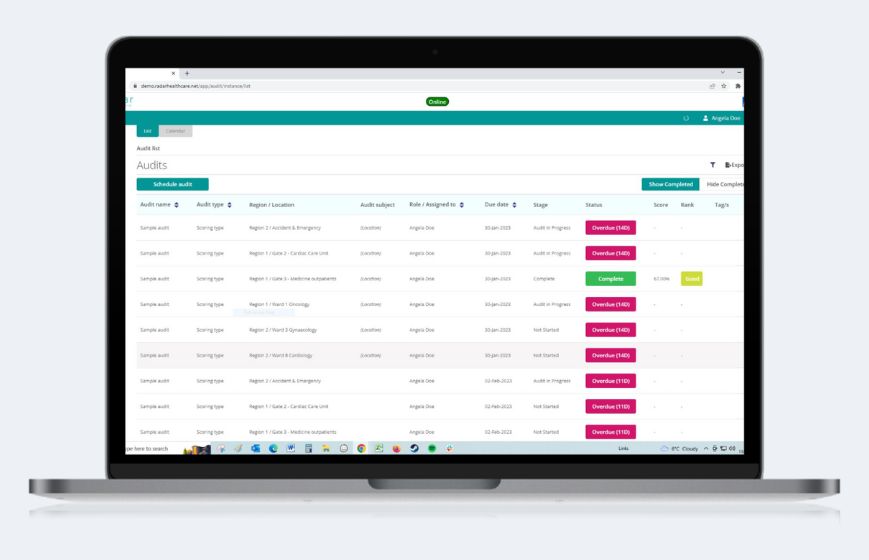
- Internal audits and compliance: Care homes can use Radar Healthcare to carry out internal audits, ensuring compliance with infection control guidelines. The system provides a clear audit trail of actions taken, helping care homes demonstrate adherence to government regulations during inspections.
- Real-time reporting and monitoring: Our data-driven approach helps care homes monitor infection trends and take proactive measures. This can be particularly useful in spotting early signs of infection outbreaks and ensuring that appropriate isolation and treatment protocols are followed.
- Policy management: Radar Healthcare allows care homes to store and manage all infection control policies in one central location. Automated notifications ensure that staff are aware of updates or refreshers, promoting adherence to the latest guidelines and best practices.
"One of our quality indicators needs us to know what infection someone has. But a manager asked for a review step so she could use that process to be more proactive in these events. We added that step in and within the first week she emailed reporting that they were using the step daily to keep track and monitor the infection and make changes to treatment where necessary."

Enhancing infection control with Radar Healthcare
Infection control is a critical component of care home management, protecting both residents and staff from harmful infections. By adhering to infection control guidelines and implementing proactive measures, care homes can significantly reduce the risk of outbreaks.
Radar Healthcare provides a comprehensive solution for infection control in care homes, streamlining processes, improving communication, and supporting compliance with government regulations. With tools for risk management, task automation and staff accountability, we enable care homes to deliver safer, more effective care.
By investing in advanced tools like Radar Healthcare, care homes can enhance infection prevention control measures, ultimately ensuring a healthier, safer environment for everyone.
Book a free demo