


Customer Spotlight: National Autistic Society
How the National Autistic Society turned around regulatory challenge across four nations
 In an evolving regulatory landscape shaped by post-pandemic recovery, changing inspection approaches, and the increasing use of digital systems, the National Autistic Society took the opportunity to strengthen its governance and oversight across services in England, Wales, Scotland, and Northern Ireland.
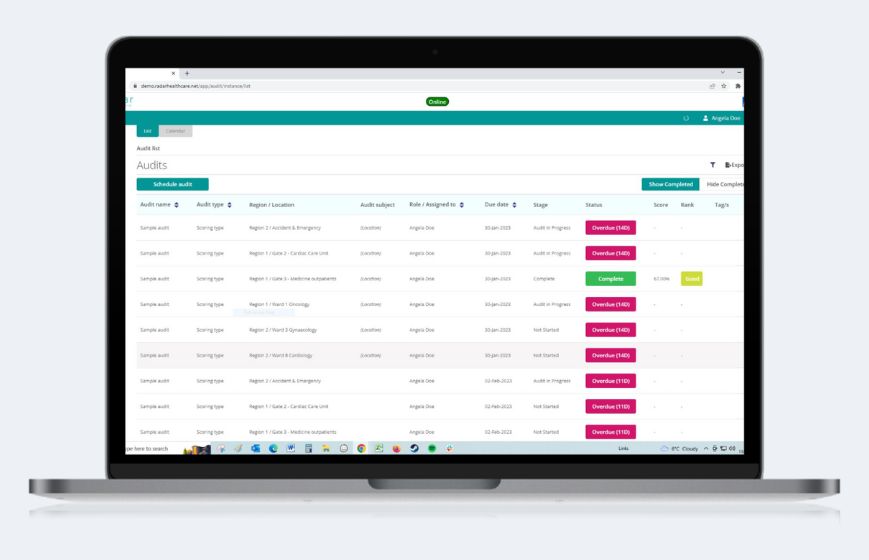
Working in partnership with Radar Healthcare, Kate Nixon and her team implemented a more structured, streamlined approach to managing compliance, evidence, and improvement activity. This enabled greater visibility, consistency, and collaboration across teams, supporting services to demonstrate progress clearly and respond confidently to regulator expectations.
Through the effective use of technology, NAS enhanced how information was shared, how evidence was captured, and how managers maintained oversight—ultimately improving outcomes for people supported and making partnership working with regulators more transparent and efficient.
180
pieces of evidence submitted to CQC portal
4 nations
multiple regulators, one governance platform
0 warning notices
remaining after re-inspection
CQC ratings
improved across sites
“Utilising Radar for action planning has significant improved visibility and accountability across the organisation and ultimately is contributing to improving the lives of the people we support.”
“The use of Radar has really helped me dedicate my work and prioritize actions. I find it incredibly useful to see a dashboard of my actions and how they align with plans of other people in my own or departments I collaborate with.”
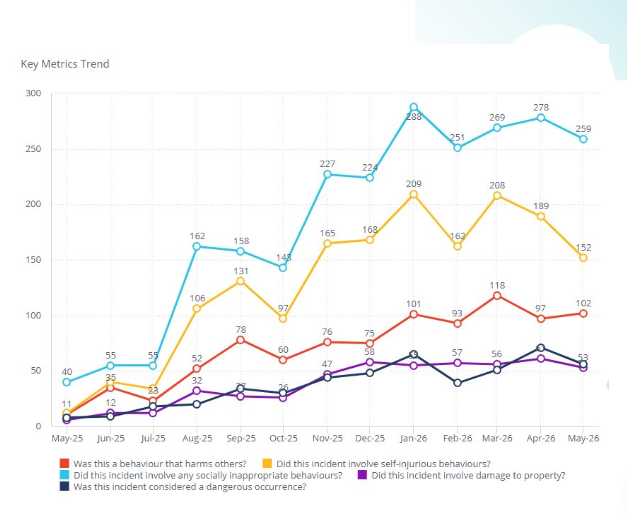
The implementation of Radar has significantly strengthened the Positive Behaviour Support (PBS) team’s ability to maintain real-time oversight across key operational and quality metrics.
The Challenge
For years, the care sector operated in a regulatory vacuum. The Care Quality Commission had not been inspecting services regularly, and in Wales, Care Inspectorate Wales was not publishing ratings, opting instead to provide narrative inspection findings only. Providers, including the National Autistic Society, had limited external challenge.
Although internal audits identified areas for development and action plans were in place, there remained a degree of reliance on external regulatory ratings to signal priority, meaning some improvements were not always progressed at pace across all services.
At the same time, the care sector was absorbing two other significant pressures. Post-pandemic financial sustainability had become the primary concern for charity-run providers. And mandatory digitalisation of care plans was adding yet another layer of organisational change to absorb.
When things do not go to plan
Then the inspectors came back, and they came back data-led, rigorous, and with expectations that had changed fundamentally from the pre-pandemic era.
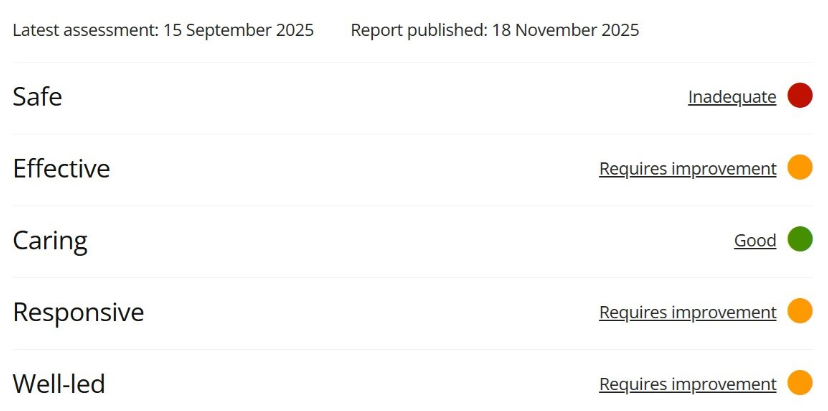
NAS received an inadequate rating in one domain and warning notices from the CQC. For some members of the team, it was the first time in their careers they had faced this situation. Nobody had a playbook. And the clock was already running.
“There were people who had worked in this industry their whole careers and never had the experience of navigating through a warning notice.” Kate Nixon, Head of Assurance and Compliance, National Autistic Society
Turn learning into safer, measurable outcomes
The Complexity
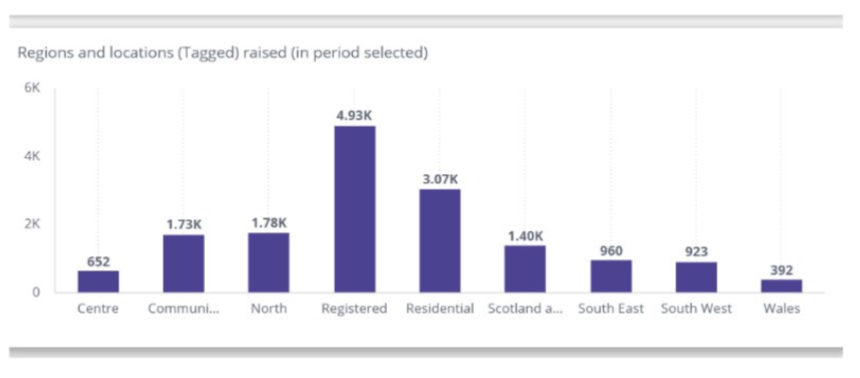
What made NAS’s situation unusually complex was the scale of the regulatory landscape it was operating within. In England, the CQC sets deadlines, and requires submissions through its own portal. In Wales, Care Inspectorate Wales operates an entirely different process. In Scotland and Northern Ireland, where regulators inspect every service every year as a minimum, the expectations differ again.
For senior leadership, the question was always the same regardless of which nation a service was in: are we on the right track? That question could not be answered by four separate spreadsheets, four separate reporting cycles, and four sets of manual presentations. It needed a single, connected governance layer that could surface the right information to the right people, in real time.
The Approach
NAS began working with Radar Healthcare to structure its recovery, the team made a deliberate decision: they would be extremely precise about how evidence was collected, formatted, and submitted. Not because it was the easy path — it wasn’t — but because it was the only path that would hold up under inspection.
Every piece of evidence had to be a PDF or word document. File names had to follow a specific format. When a manager needed to submit their evidence package to the CQC portal, the design of the process meant they could click a single button — rather than spending hours renaming documents, chasing teams for missing files, or trying to reconstruct an audit trail under pressure.
“On the day of inspection, the manager knows they’ve got three warning notices. They know they’ve got an inadequate domain rating. Unless everyone gets on board, we are unable to support the manager to evidence that they have moved forward.” Kate Nixon, Head of Assurance and Compliance, National Autistic Society
Getting there required a cultural shift as much as a technical one.
The Governance Model
One of the most significant changes NAS embedded through Radar Healthcare was a mandatory second line of defence for all compliance-related actions.
Under the new model, no action, whether it arose from an internal audit or a formal inspection, could be marked as complete until an independent reviewer had verified the evidence. The manager could not close their own action. A separate person had to review the upload, confirm it was in the right format, and sign off that it met the required standard.
This verification layer also changed the nature of conversations with the regulator. When NAS was able to sit with the CQC inspector and demonstrate — live, in the platform — exactly how actions were allocated, how evidence was reviewed, and who at board and director level had oversight of the process, the inspector’s response was unambiguous.
“The inspector was satisfied that we can demonstrate learning from the first inspection and that this learning is being applied through actions across other local services.” Kate Nixon, Head of Assurance and Compliance, National Autistic Society
Governance Upward
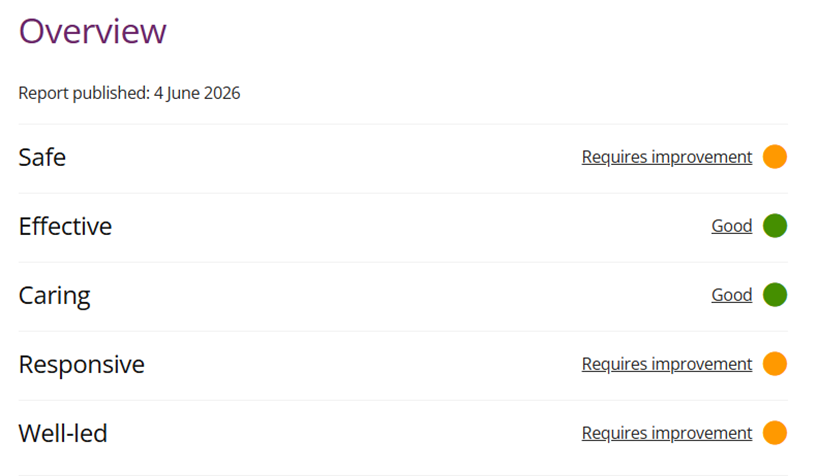
The impact of Radar Healthcare extended well beyond the immediate CQC recovery. As a result, both the Safe and Effective ratings improved significantly, achieving Requires Improvement and Good respectively, while providing a clear framework for further improvement.
There has been a clear shift in how progress is evidenced to senior leaders, with much greater visibility of how it evolves day by day. Weekly senior meetings use the platform to demonstrate live progress, track actions in real time, and ensure clear oversight of improvements across services.
The shift from weekly manual reporting to dashboard-driven oversight is not just an efficiency gain. It means that senior leaders are never more than a week away from the current picture and that the picture they see is the same picture the operational team is working from. There are no surprises.
What comes next?
NAS’s work with Radar Healthcare continues. The next focus is behaviour support, developing a bespoke behaviour event model that enables the Positive Behaviour Support teams and managers to identify patterns in reported incidents before they escalate into a health crisis.
For an autism specialist provider, the importance of this is acute. A person who is unwell may not be able to say so. But a pattern of repeated behaviour incidents — logged in real time, surfaced on a person’s timeline — can be an early indicator that something is wrong, sometimes weeks before a clinical picture becomes clear.
“If those incidents had been written on paper and put in an in-tray, we would have missed it. The system showed us what a person couldn’t tell us.” Kate Nixon, Head of Assurance and Compliance, National Autistic Society
The goal is not data for its own sake. It is giving managers the confidence to act and giving senior leaders the assurance that the information reaching them is complete, timely, and trustworthy.
From an inadequate domain rating and warning notices to a functioning to a functioning, evidence-led governance model operating across four nations, NAS’s experience is a clear demonstration of what structured, transparent governance can achieve, even when the starting point is as difficult as it gets.