


Introducing Radar Healthcare Digital Consent: a platform that goes beyond a signature to uncover hidden patient safety risks
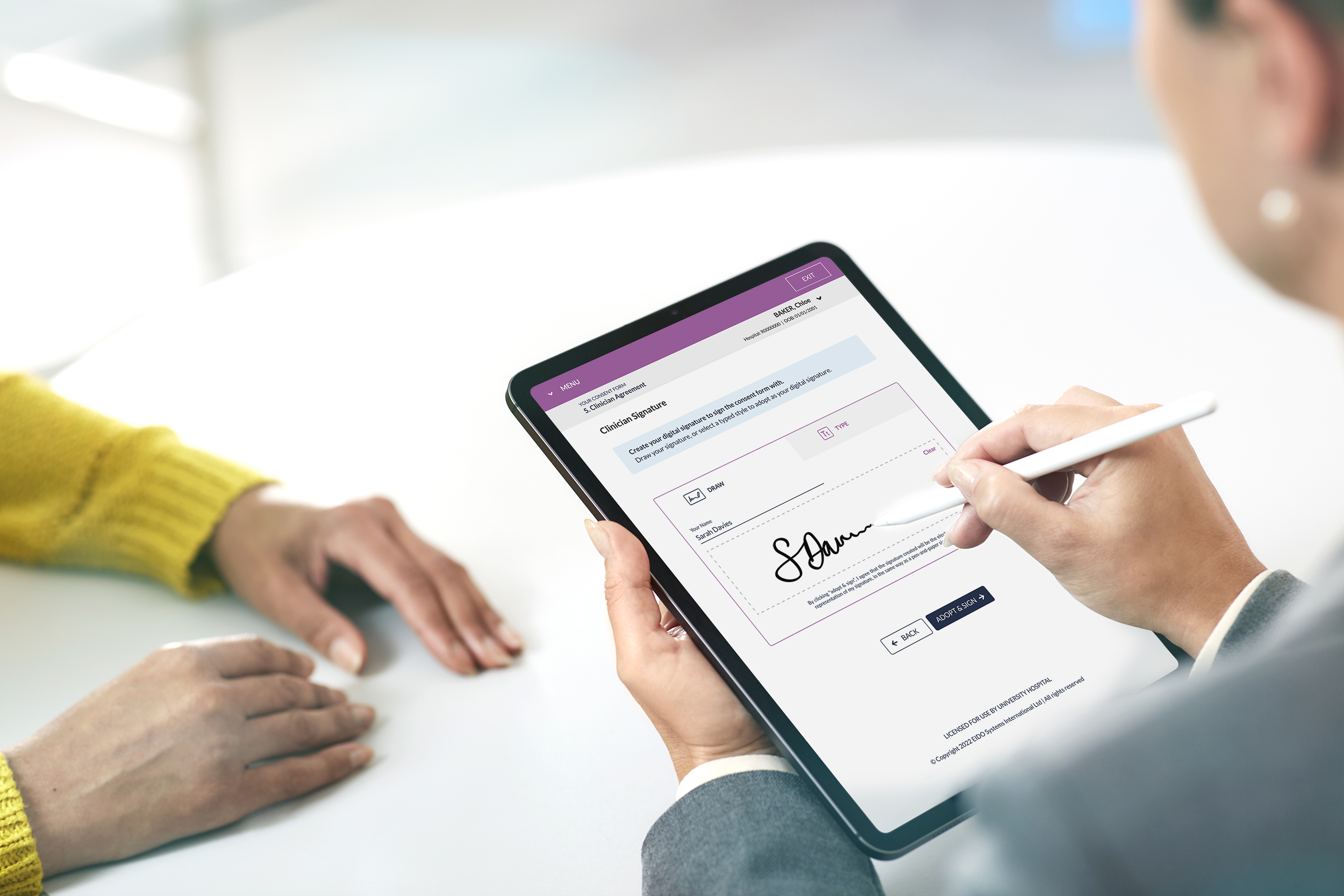
Consent is one of the most critical pathways in healthcare, underpinning patient safety, informed decision-making, and clinical accountability. It also carries significant medico-legal importance, requiring healthcare organisations to follow processes that are clear, consistent, and well documented.
As part of the consent pathway, healthcare providers must give patients accessible, easy-to-understand information about their treatment options, risks, and outcomes to support truly informed decisions. At the same time, the process itself must be fully traceable and well evidenced to meet governance, assurance, and compliance requirements.
 Radar Healthcare puts quality informed, patient‑centered pathways at the heart of governance, unifying consent, risk, and insight to turn data into learning to deliver safer outcomes at every step.
EIDO Patient Information has long set the benchmark for informed consent, providing trusted, accessible and clinically robust content. By embedding this gold-standard content within Radar Healthcare’s digital quality and assurance platform, we have created a complete, patient-centred informed consent pathway which is governance-ready by default and market-leading in its ability to capture data and drive learning.
Together, this helps healthcare providers improve patient understanding, reduce variation in consent practices, minimise avoidable disputes, and identify risks linked to communication breakdowns and consent failures earlier.
This article explores Radar Healthcare Digital Consent, how it solves problems within the traditional consent process and supports both patient and clinicians in the full consent pathway, not just at the point of signature.
The problems with traditional consent processes
In healthcare, consent is often still captured using paper-based or disconnected systems, which can lead to issues surrounding illegible handwriting, making records harder to manage and rely on when needed.
Inconsistent approaches to documentation across teams and services can also lead to variation in the quality and completeness of consent records, which can affect patient understanding and the increases the risk of post-procedure consent related adverse incidents. Fragmented or unclear records can increase medico-legal risk by making it harder to evidence what information was provided and consent obtained.
Additionally, failures in informed consent continue to represent a substantial clinical and financial challenge for healthcare providers. Between 2019 and 2025, we understand that nearly £460 million was paid out by NHS Trusts and independent sector providers in claims relating to informed consent failures. *
The full extent of consent-related risk may also be far greater than reported figures suggest. Consent failures are often only formally recognised when they become the primary cause of a complaint or claim, while communication breakdowns and gaps in patient understanding often remain hidden within wider patient safety incidents.
How Radar Healthcare Digital Consent offers the solution to these challenges
Radar Healthcare Digital Consent is designed to improve the quality and consistency of informed consent pathways, while supporting organisations to identify, analyse and learn from consent-related adverse incidents where communication breakdowns may have occurred.
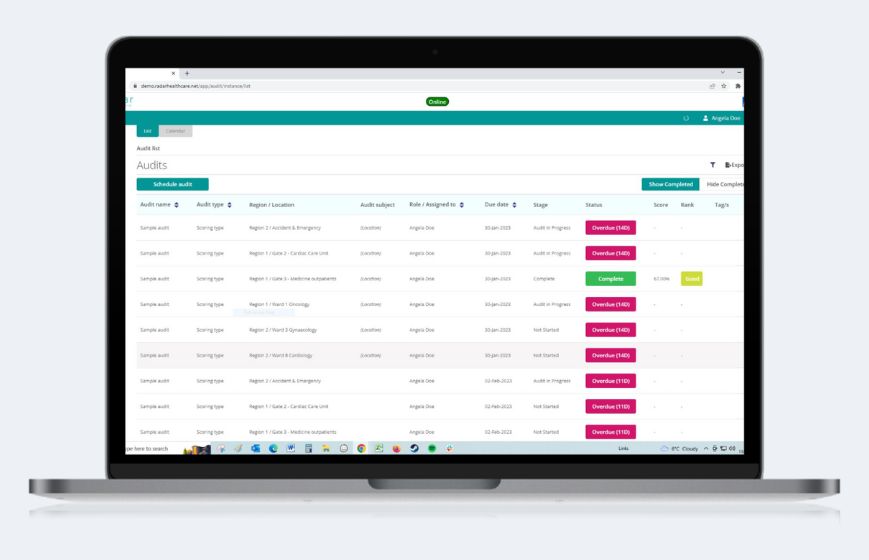
 Unlike standalone consent tools or paper-based systems, Digital Consent integrates seamlessly into the wider Radar Healthcare quality, risk and governance platform. By bringing Digital Consent into a single, joined-up system, organisations can connect consent activity with incidents, complaints, audits, claims, risk and organisational learning.
Staff are then supported to follow best-practice consent processes, patients benefit from a seamless digital journey, and organisations gain clear visibility and assurance across the wider compliance landscape.
This matters because consent is far more than an administrative step or a tick-box exercise, instead, it is a continuously improving pathway. Ultimately, at the heart of every consent journey is a patient who requires a clinical procedure and may feel anxious about their care.
To support this, Radar Healthcare strengthens the entire care pathway. Through structured workflows and gold-standard patient information, it supports better, more informed decision-making from the start, helping patients gain a clearer understanding of their care, while enabling clinicians to reduce variation and prevent issues before they arise.
"Radar Healthcare is the only platform that combines EIDO patient information as part of its workflow while connecting consent directly into the wider risk, governance and learning processes. It helps organisations not only evidence consent but continuously improve how patients experience and understand their care."
However, when issues do occur, being able to identify, view and analyse everything in the same connected system ensures they are not lost in isolation. Organisations can trace consent activity to related events, identify where communication or understanding may have broken down, and learn from it in a structured way.
Changing the narrative on informed consent to put patients at the centre of care
A critical measure of quality is how well organisations enable patients to understand their care and make informed decisions. Yet adverse events are often underreported, and there is limited data to assess the quality of the patient pathway, particularly where communication gaps or misunderstanding have contributed to harm.
As consent is not a standalone moment or just a signature to be captured, the pathway should begin with patients receiving clear, accessible information about their procedure in a format they can easily understand.
EIDO Patient Information, which is embedded in Radar Healthcare Digital Consent, provides a trusted source of standardised, condition and procedure specific high-quality information to improve patients understanding of their care and support shared decision-making between patients and clinicians. This also reduces the risk of any misunderstanding in relation to procedures or post-procedure care which could impact consent processes further down the line.
To support patient understanding, information must be accessible and available in formats that meet different patient needs. EIDO patient information leaflets are therefore available in a variety of formats, including:
- Easy-read format
- Translated into 30 languages
- Large-print
- Screen reader
- Dyslexia-friendly settings
- Animations
As part of this process, EIDO Patient Information also incorporates best-practice BRAN guidance (Benefits, Risks, Alternatives and doing Nothing), helping patients to fully understand their procedure and consider all available options as part of informed consent discussions.
Radar Healthcare Digital Consent ensures every interaction between patients and healthcare teams can be time-stamped and linked to specific patient information documents. This creates a comprehensive audit trail that supports both patients and clinicians, including in cases requiring medicolegal defence.
This is reflected in NHS Resolution data, which shows that Radar Healthcare customers received fewer claims relating to informed consent failures and, where claims were brought, the total compensation paid was more than 40% lower compared with organisations not using Radar Healthcare.
“Informed consent is about supporting patients to make decisions based on information that matters to them. Digital tools help teams deliver consistent information, capture what was shared and when, and free up time for the conversation that only a clinician and patient can have.”
Strengthening governance, organisational learning and reducing consent-related risk
Having the information around patients’ understanding and informed consent evidenced is also important where consent, communication or patient understanding may have been a contributing factor, even where it is not recorded as the primary cause. For example, a patient may have signed a consent form but later experience an adverse event because they did not fully understand the recovery process, risks involved or post-procedure instructions.
Traditionally, these insights are difficult to identify systematically across organisations but by connecting consent data with incidents, audits, complaints and wider governance activity, Radar Healthcare makes these patterns visible. This enables organisations to identify recurring themes, understand where communication breakdowns may have contributed to adverse events, and strengthen patient understanding at key stages of the pathway.
“As a Consultant Surgeon qualified in Health Law, as the ASGBI’s Medico Legal Lead, I fully understand the absolute requirement for patients to be fully informed about their upcoming surgical or medical procedure. EIDO’s informed consent library is undoubtedly the gold standard in this field. It’s been tried, tested and proved by most of the NHS over the last 20 years.”

Enabling a Safer, More Informed Consent Process
Ultimately, informed consent should be viewed as far more than a single form or signature. When supported by accessible patient information, connected governance processes and meaningful organisational insight, consent becomes a continuously improving pathway that helps reduce issues upfront while enabling healthcare providers to learn when things do go wrong.
By connecting Digital Consent with incidents, complaints, audits, claims and wider governance activity, Radar Healthcare supports safer, more transparent and more reliable consent processes across healthcare organisations. This not only helps strengthen patient understanding and shared decision-making but also supports the wider goal of improving patient safety and reducing avoidable harm. Radar Healthcare also enables organisations to move beyond isolated consent processes towards a more proactive and learning-focused future.
Footnote:
*Source: Independent and comparison analysis based on NHS Resolution Data: Number and Cost of CNST Claims Closed (or settled with a periodical payment order) between financial years ‘2019/20’ and ‘2024/25’ with a damages payment, where the Primary Cause is ‘Fail to Warn – Informed Consent’ (acknowledging that there will inevitably be gaps between incident occurrence and claim closure which may impact the timing of claims being captured, and due to the way data is recorded, claims may appear in more than one dataset).
Find out more