Radar Healthcare Digital Consent Icon

✨ Discover Digital Consent: Built for the whole consent journey, not just a signature.

Find out more

RADAR HEALTHCARE DIGITAL CONSENT


Built for the whole consent journey. Not just a signature.

The complete digital consent solution that helps every patient feel truly informed, every clinician feel supported, and every decision defendable.


Defensible consent for clinicians.
Clear assurance for leaders.

Digital Consent helps…

Consultant surgeons icon

Consultant Surgeons

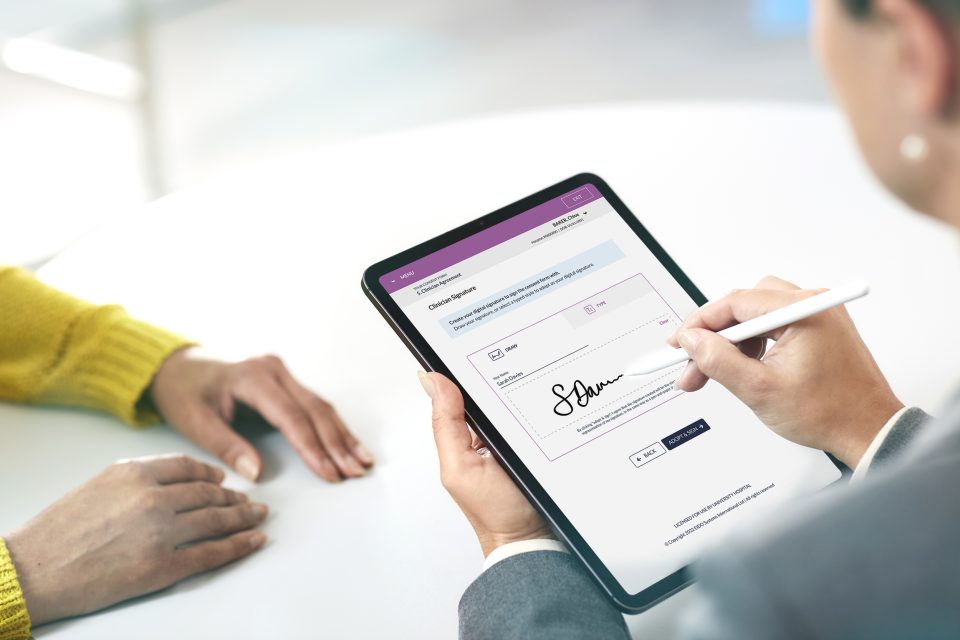
Replace the uncertainty of incomplete forms and inconsistent conversations with a guided, defensible consent process so you can focus on what matters most: the patient.

Clinical digital leads icon

Clinical-Digital Leads

Roll out digital consent across your organisation with confidence; knowing every procedure, pathway, and patient is supported by a consistent, compliant system.

Patients icon

Patients

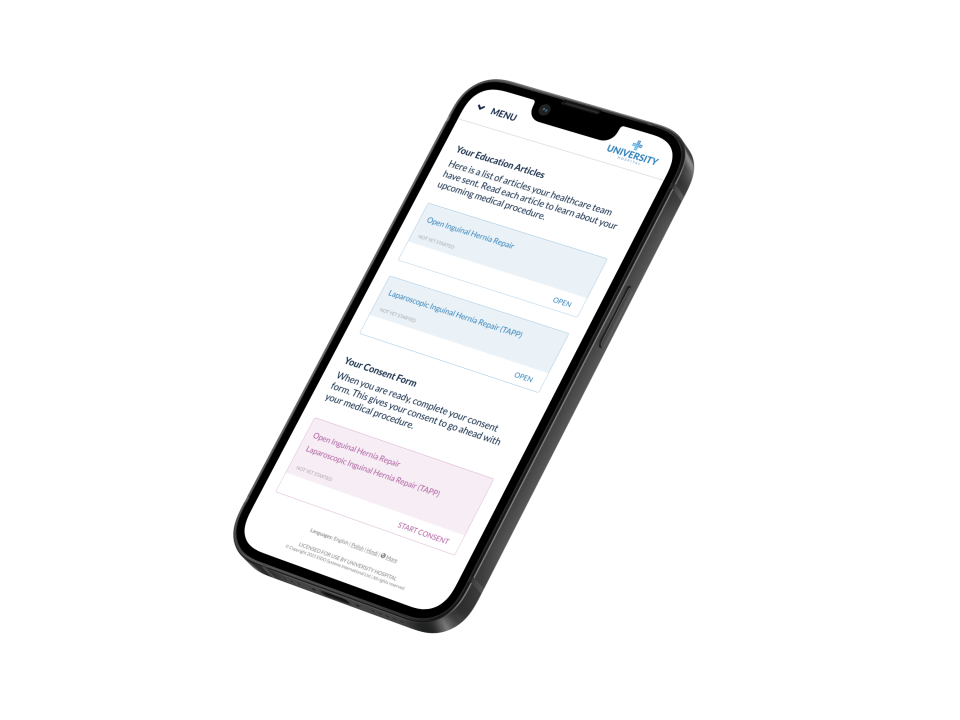
Truly understand what they’re consenting for with time to absorb the information, in a space they feel most comfortable, for a more positive outcome.

“The initiative of Digital Consent with endoscopy services has provided an opportunity for the services to review how they share important information with patients who are undergoing a procedure. Feedback from clinicians is that, since the initiative got underway, patients have attended their appointment appearing more aware of the risks and benefits of the procedures, time to confirm consent prior to the procedure has reduced and the recording of consent is swift.

We are grateful for the support of the EIDO team at Radar Healthcare in making this initiative a success. We are also grateful to colleagues from Aneurin Bevan University Health Board for implementing the pilot and supporting the change to patients. The feedback from staff and patients is overwhelmingly positive.”

Jonathan Webb, Head of Safety and Learning, NHS Wales - Welsh Risk Pool

Why informed consent matters now

Consent has fundamentally changed.

Following the Montgomery ruling, consent is no longer a clinician‑led process; it is a shared decision‑making process, where patients must be given clear, personalised information about what matters to them.

At the same time, organisations are under increasing pressure to demonstrate compliance with GMC guidance, reduce litigation risk, and standardise care across teams and sites.

Yet many consent processes remain inconsistent, difficult to evidence, and hard to scale, especially when reliant on paper or disconnected digital tools.

Consent is no longer just a clinical task.
It is a governance and risk priority.

£460m+

paid out by NHS trusts and independent sector providers in claims relating to informed consent between 2019 and 2025*

Start delivering truly informed consent

Moving to digital consent is a good start, but it’s not enough on its own.

Radar Healthcare helps you deliver informed consent that patients understand, clinicians trust, and organisations can evidence; across every procedure, every pathway, and every patient.


What good consent actually looks like

True informed consent is not a single step; it’s a connected system that ensures patients understand, clinicians follow best practice, and organisations can evidence every decision.

🧠

Understanding

Patients receive clear, accurate information they can genuinely understand.

🧾

Structure

Clinicians follow a consistent, guided consent process across every procedure.

📊

Governance

Organisations can evidence, monitor, and improve consent at scale.

Consent that is understood, consistent, and defensible.

"We have been partnering with EIDO for nearly 15 years now, when we had a great relationship with legacy UHSM (Wythenshawe hospital). Since the merger in 2017 and the roll out of Hive (MFT EPR) we have extended the use across all MFT hospitals and managed clinical services.

This has been an amazing success with the uptake and usage of North Manchester Clinical Group and Trafford Elective Hub surpassing the usage at Wythenshawe hospital.

We look forward to continuing to work with EIDO to increase usage across all clinical areas and developing full integration with Hive to provide a seamless workflow for all our staff and Digital access to all our patients."

Dr Dare Seriki, MB ChB MRCP FRCR, Consultant Vascular Radiologist, Associate Chief Medical Officer, Quality & Patient Safety at Manchester University NHS Foundation Trust (MFT)

Most digital consent solutions focus on forms. Radar Healthcare delivers a complete, connected system built on gold standard patient information and governance.

Radar Healthcare
Digital Consent
EPR
Systems
Other Consent
Providers
Gold standard content
In House Editorial Team
Senior Clinical Review Team
Plain English Accredited
Citizen Consent Pathway
Doctor/HCP Consent Pathway
API Integrator (any willing provider)
Proven in courts of law
Insights and learning from claims data
Part of wider governance ecosystem (risk, quality, audits)
Track and trace (complete document archives)
Translation and Accessibility


Not just digital consent.
A complete informed consent platform.

Most solutions digitise a single step.
Radar Healthcare connects the entire consent journey. Here’s how ⬇️

FULLY INTEGRATED CONSENT PLATFORM

Everything in one place

Most digital consent tools stop at the form, leaving patient information, engagement, and governance disconnected. Radar Healthcare brings everything together, combining patient information, consent workflows, and auditability in a single platform.


INFORMATION PATIENTS ACTUALLY UNDERSTAND

Start with understanding, not forms

Consent begins with patients understanding what’s being proposed. Radar Healthcare provides gold-standard, clinically validated patient information, trusted across the NHS so every patient receives clear, accurate and accessible information about their procedure, risks and alternatives.


CONSENT CAPTURED FOR EVERY PROCEDURE

Capture consent consistently, at scale

Digital forms only work when they reflect real clinical practice. Radar Healthcare combines procedure-specific content with guided workflows, allowing clinicians to obtain consent for any procedure; supporting consistent, compliant consent across the entire organisation.


A CONSENT RECORD YOU CAN TRUST

Evidence every decision with confidence

Every step of the consent process is captured in a complete, auditable record; linking patient, procedure, information shared, engagement and outcome. This creates a defensible evidence chain aligned with GMC, CQC and medico-legal best practice.


Helping healthcare organisations deliver safer, more consistent consent

Everything needed for truly informed, defensible consent, in one connected system.

Say goodbye to inconsistency, risk and inefficiency.

Reduce medico-legal risk

Close the gap between information provided and consent captured with a fully evidenced, defensible audit trail.

Deliver consistent consent

Standardise consent across clinicians, procedures and sites to reduce variation and improve quality.

Improve patient understanding

Provide clear, accurate and accessible information so every patient can make a truly informed decision.

Enable organisation-wide rollout

Support consent for any procedure, across every specialty, without falling back to paper processes.

Strengthen compliance and governance

Align with GMC guidance, CQC expectations and medico-legal best practice by default.

Move from “we hope this stands up” to “we know it does”, with a consent process you can trust.

“EIDO’s informed consent library is undoubtedly the gold standard in this field. It’s been tried, tested and proved by most of the NHS over the last 20 years.”

Consultant Surgeon & Medico-Legal Lead, Association of Surgeons of Great Britain & Ireland

Trusted and proven across healthcare

Built on over 25 years of clinical content expertise, Radar Healthcare supports informed consent at scale across the NHS and independent sector.

Icon placeholder

90%+

of UK surgical procedures supported by our patient information

Icon placeholder

25+ years

trusted use across the NHS

Icon placeholder

40,000+

clinicians access our content every month

Icon placeholder

28%

lower consent-related litigation costs reported by customers

Recognised in UK courts, certified by the PIF TICK and Plain English Campaign, and endorsed by Royal Colleges and Associations.

🚀 Replacing paper with digital forms is only the first step

Radar Healthcare helps you deliver truly informed consent; where every patient understands, every clinician is supported, and every decision can be evidenced as part of a defensible, organisation-wide process.

Start delivering consent you can trust.

Book a free demo

Digital Consent FAQs

Digital consent in healthcare is the process of using digital tools to support, capture and evidence informed patient consent for treatment.

Rather than relying on paper forms, digital consent combines patient information, clinician workflows and audit records into a connected system. This allows patients to receive clear, accessible information about their procedure, risks and alternatives in advance, giving them time to understand and make informed decisions.

For clinicians and organisations, digital consent provides a structured, consistent way to capture consent and create a complete, auditable record of what was discussed, what the patient understood and how the decision was made.

However, simply replacing paper with digital forms is only the first step. True digital consent goes beyond collecting a signature, supporting patient understanding, improving consistency across pathways, and providing the evidence needed to meet clinical, regulatory and medico-legal standards.


Many digital consent solutions focus primarily on digitising forms or workflows. Radar Healthcare takes a broader approach by combining clinically validated patient information, structured consent processes, and full auditability within one platform. This creates a complete, joined-up system that supports the entire consent journey, from patient understanding through to a defensible, organisation-wide record.

A legally defensible consent record goes beyond a signed form. It should clearly demonstrate what information was shared, how risks and alternatives were explained, how the patient engaged with that information, and how the final decision was reached. A structured, time-stamped, and auditable digital record helps provide this level of evidence, supporting compliance with legal and regulatory expectations.

Yes — when supported by comprehensive clinical content and flexible workflows, digital consent can be applied across all specialties and procedures. The key is ensuring that clinicians have the right information and structure available for each scenario, so they don’t revert to paper or inconsistent approaches when dealing with less common procedures.

Digital consent is designed to support the consent process, not restrict it. Where patients do not have access to devices or digital tools, clinicians can share information in person using printed materials or PDFs generated from the system.

This ensures that no patient is excluded, while still maintaining a consistent, structured and clinically robust approach to consent. Digital tools enhance the process where possible, but inclusive access remains central.

Digital consent can be used flexibly across different care settings. Patient information can be shared in advance where possible, but where device access is limited, clinicians can use printed or PDF versions within consultations.

The key benefit is that the underlying content and structure remain consistent, ensuring patients receive the same high-quality information regardless of how it is delivered.

Yes. While digital consent provides a structured framework based on best practice, it is designed to support clinical conversations, not replace them.

Clinicians can tailor how information is delivered and discussed depending on the patient’s needs, ensuring flexibility while maintaining consistency, completeness and medico-legal robustness.

Yes. Radar Healthcare supports informed consent across a wide range of patient needs through accessible content and flexible delivery.

Clinicians can access and share Easy Read patient information as downloadable PDFs to support conversations with patients who may benefit from simplified formats, including those with lower literacy or learning disabilities.

Alongside this, the platform supports multiple languages, structured content and clear presentation to help ensure patients receive information in a way they can understand.

This approach supports inclusive, patient-centred consent while ensuring decisions remain informed, clinically appropriate and aligned with best practice guidance.

Yes. Radar Healthcare Digital Consent is designed to be fully accessible, supporting a wide range of user needs and clinical environments.

The platform includes features such as high-contrast display settings, scalable text and clear, structured interfaces to support users with visual impairments and accessibility requirements.

Combined with accessible patient information formats, this helps ensure both patients and clinicians can engage with the consent process effectively, supporting inclusive and equitable care.

*Source: Information and comparison analysis based on NHS Resolution Data: Number and Cost of CNST Claims Closed (or settled with a periodical payment order) between financial years ‘2019/20’ and ‘2024/25’ with a damages payment, where the Primary Cause is ‘Fail to Warn – Informed Consent’ (acknowledging that there will inevitably be gaps between incident occurrence and claim closure which may impact the timing of claims being captured, and due to the way data is recorded, claims may appear in more than one dataset).