


EIDO Patient Information Recognised as the Gold Standard in High Court Consent Case

A landmark High Court judgment has reaffirmed the critical role of high‑quality patient information and accurate clinical record‑keeping in supporting safe, lawful, and defensible informed consent.
In Deborah Biggadike v Kamilia El‑Farra and Sohier El‑Neil (2024), the Court explicitly identified EIDO Patient Information as the “gold standard” for informed consent. The decision offers vital lessons for healthcare providers seeking to comply with Montgomery principles, reduce clinical negligence risk, and strengthen patient trust.
The case in brief: informed consent under scrutiny
The case concerned allegations of defective informed consent and poor medical record‑keeping following multiple urogynaecological procedures. The judgment, which spanned more than 400 paragraphs, examined whether clinicians had met the legal standard for informed consent and whether their records accurately reflected clinical decision‑making.
Key legal frameworks considered by the Court included:
- Montgomery v Lanarkshire Health Board – patient‑centred informed consent
- Bolam and Bolitho principles – assessment of clinical judgment
- McCulloch v Forth Valley Health Board [2023] UKSC 26 – the “first‑stage” test for clinically viable alternatives
- The role of NICE guidelines in consent discussions
Central to the outcome was the quality of evidence provided, including patient information materials and contemporaneous clinical records.
High Court findings on informed consent
The Court assessed the conduct of two clinicians separately, with markedly different outcomes.
Where consent was upheld
The judge found that Dr El‑Farra had followed appropriate, Montgomery‑compliant consent processes. A key factor in this conclusion was the use of four EIDO Patient Information leaflets, which the Court described as the “gold standard” for patient information.
These documents demonstrated that the patient had access to clear, authoritative explanations of:
- The benefits of treatment
- The material risks involved
- Reasonable alternatives, including non‑surgical options
- The implications of doing nothing (BRAN)
As a result, the Court concluded that Dr El‑Farra had not been negligent.
Where consent failed
In contrast, the Court found Dr El‑Neil negligent, citing a failure to disclose key diagnostic information that would have been material to the patient’s decision‑making. This omission invalidated the patient’s consent to surgery.
Findings on clinical record‑keeping
The case also highlighted the legal consequences of inadequate and non‑transparent clinical records.
The Court determined that certain medical notes presented as contemporaneous were in fact retrospective annotations, added to justify clinical decisions after the event. This finding severely undermined the clinician’s credibility and contributed to the claimant being awarded substantial damages of approximately £500,000.
The judgment reinforced that:
- Clinical records must be accurate, contemporaneous, and transparent
- Retrospective alterations can be interpreted as dishonesty
- Poor record‑keeping significantly weakens a clinician’s legal defence
Why EIDO Patient Information was recognised as the “gold standard”
The judge made explicit reference to EIDO Patient Information in multiple parts of the judgment, confirming its value in supporting informed consent processes.
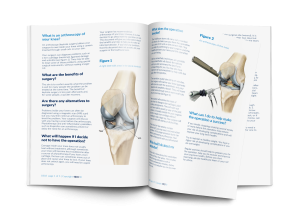 EIDO documents were recognised because they:
🧾 Provide consistent, evidence‑based patient information
🤝 Support Montgomery‑compliant consent discussions
📚 Align with professional expectations and relevant guidance
🗂️ Help demonstrate what information was made available to patients, and when
In this case, the availability of EIDO Patient Information was critical in establishing that the patient had access to the information needed to make an informed decision, even where there was later dispute about verbal discussions.
However, high-quality patient information is most effective when it forms part of a wider, structured consent process. Radar Healthcare Digital Consent brings together patient information, clinician workflows and auditability to ensure consent is consistent, defensible and aligned with medico-legal best practice.
Wider implications for healthcare organisations
This High Court decision reinforces several critical principles for healthcare providers, commissioners, and governance teams:
🔄 Informed consent is a process, not a form
Consent requires ongoing dialogue, supported by clear written information, rather than a one‑off signature.
🏥 Patient information must be authoritative
Using clinically validated patient information leaflets reduces variation, improves understanding, and strengthens defensibility.
🗃️ Record‑keeping underpins legal compliance
Accurate documentation is essential not only for continuity of care, but also for regulatory compliance and litigation defence.
Recent High Court trends on consent and documentation
The Biggadike judgment aligns with other recent High Court decisions on informed consent, including:
- SD v AR & JT [2024] – failure to record risks on consent forms may be determinative where evidence is disputed
- Winterbotham v Shahrak [2024] EWHC 2633 (KB) – clinician found negligent for failing to explain material risks and allow discussion
Together, these cases demonstrate increased judicial scrutiny of both what information is provided and how it is recorded.
Radar Healthcare’s commitment to safe and compliant consent
Radar Healthcare is committed to supporting clinicians and healthcare organisations with tools that enhance patient communication, consent processes, and clinical governance.
Following the integration of EIDO, Radar Healthcare continues to provide clinically reviewed, accessible, and authoritative patient information that supports:
- Montgomery‑compliant informed consent
- Shared decision‑making
- Transparent and defensible clinical practice
However, high‑quality resources must be embedded within a culture of open dialogue, honesty, and meticulous record‑keeping to be fully effective.
A clear call to action for healthcare organisations
This case demonstrates that gold‑standard patient information and robust documentation are no longer optional. They are central to patient safety, professional integrity, and legal defence.
Protect your patients. Support your clinicians.
Speak to Radar Healthcare about implementing EIDO Patient Information to:
- Strengthen informed consent processes
- Reduce consent‑related litigation risk
- Standardise patient communication across services