


Customer Spotlight: North Bristol NHS Trust
As one of the largest hospital trusts in the UK, North Bristol NHS Trust employs over 12,000 staff and provides healthcare services to more than 750,000 people across the South West. Recognised as a centre of excellence, delivering high-quality care at this scale requires more than clinical expertise, it demands strong and connected governance.
Since partnering with Radar Healthcare in 2021, the Trust has adopted a single, end-to-end framework to streamline processes, establish a unified source of truth, and embed shared learning across teams.
Streamlining processes and improving outcomes at North Bristol NHS Trust
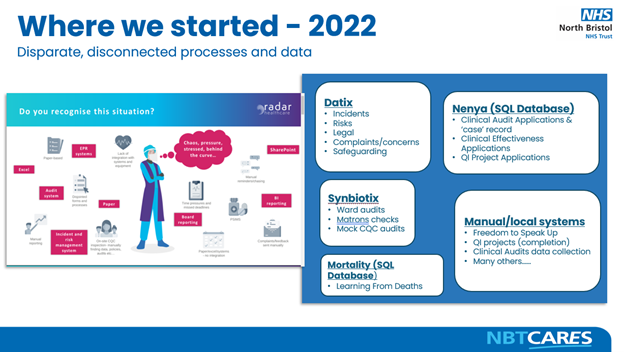
Before implementing Radar Healthcare, North Bristol NHS Trust operated with processes that were often fragmented and systems that were not fully connected. This meant that work was duplicated, data was inconsistent across departments, and reporting relied heavily on manual effort, all of which made operational oversight and safety governance more difficult.
Staff were spending valuable time checking and correcting information instead of focusing on patient care, and North Bristol NHS Trust recognised the need for a solution that could bring structure, clarity, and insight to its governance practices.
Providing a single, integrated platform
Radar Healthcare provided an integrated platform tailored to North Bristol NHS Trust’s needs. As a result, they now have a single, structured framework aligned to organisational accountability, supporting 18+ integrated processes. Standardised controls and streamlined, continuously improved workflows ensure consistency without “lift and shift” limitations.
With one reliable source of truth, powered by integrations, APIs, data cleansing and exception management, high-quality data drives accurate insights. Enabling the team to ensure everything is tailored around one overarching goal. “To deliver data-driven insights that enable effective decision-making and continuous improvement in safety, quality, and patient outcomes.”
Through shared learning with Radar Healthcare and NHS partners, and collaboration across supplier and working groups, best practice is embedded across the system
“The most important benefit from using Radar Healthcare is that clinical frontline teams who sometimes lack the requisite digital skills or capacity are significantly reducing time pulling together, checking and correcting data, freeing them up to up to spend more time with patients delivering the care they need”
Standardise, systemise and repeat
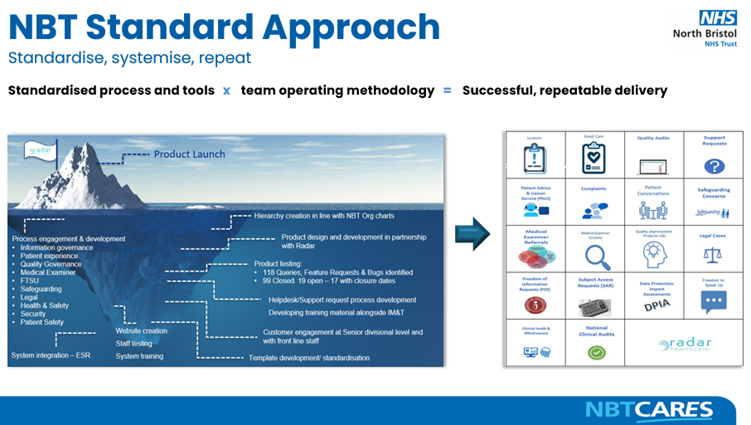
As Jenny explained, “a strong foundation has enabled a consistent successful delivery”. Significant behind-the-scenes work ensured a robust system launch, with 18 integrated modules operating from a single location hierarchy and role-based accountability structure.
APIs seamlessly integrate staff data from ESR/AD and patient data from Careflow, creating a standardised, scalable system with no variation, making expansion straightforward.
By starting with less complex processes to embed understanding and confidence, and then progressing to more complex workflows, the rollout was structured, stable, and repeatable.
Since the incident module went live on 15 July 2025, reporting levels have remained consistent at around 320 incidents per week, aligning with previous Datix rates with users providing positive feedback on the simplicity of the Reporter form.
Analytics now support decision-making from location managers through to divisional leads, with over 30 specialist teams involved in the process. Gaps from the previous system have been addressed, including ensuring feedback is provided to every reporter.
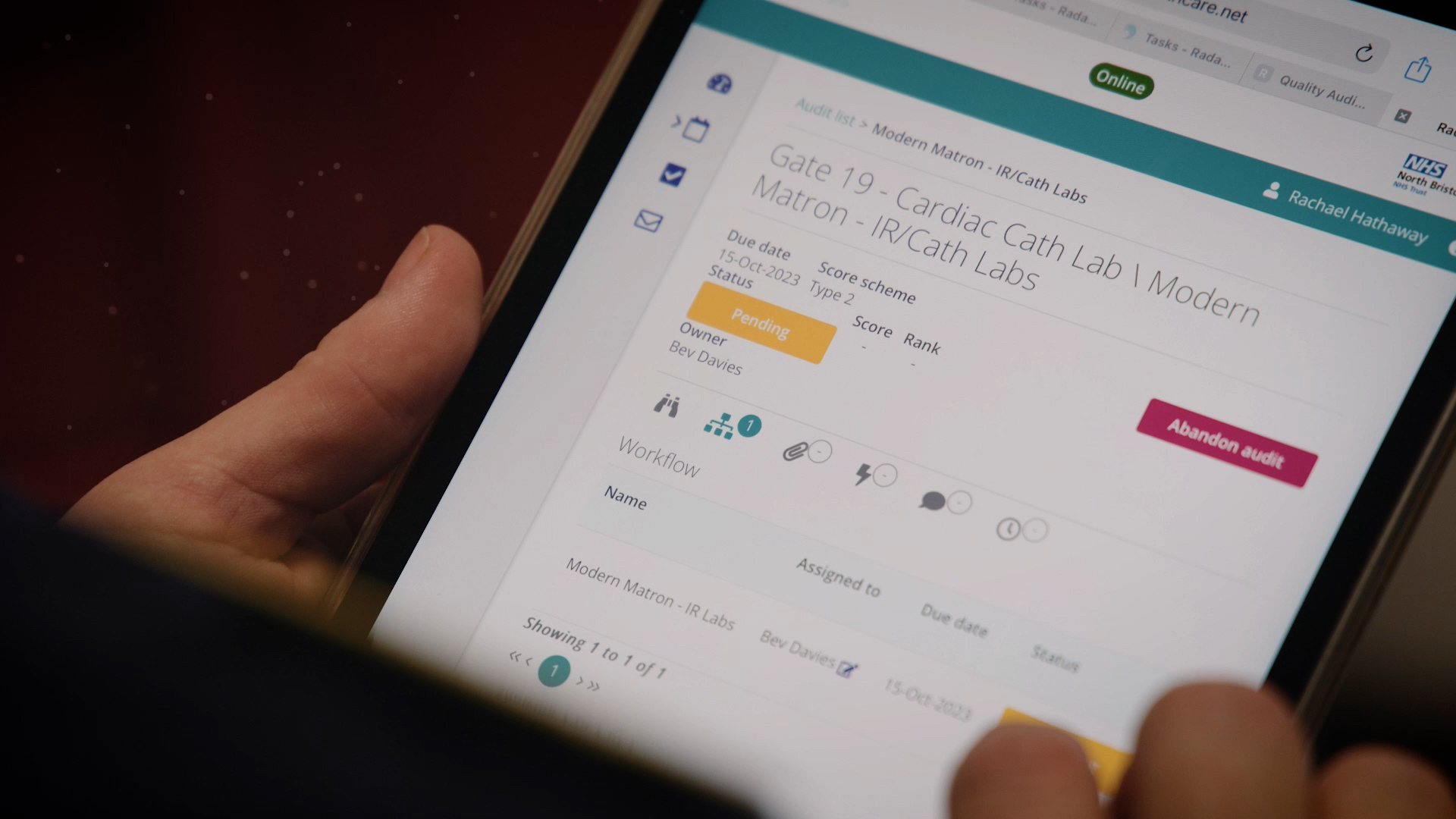
Continuous improvement remains a priority, with over 70 enhancements made post go-live in response to user feedback and Radar Healthcare support.
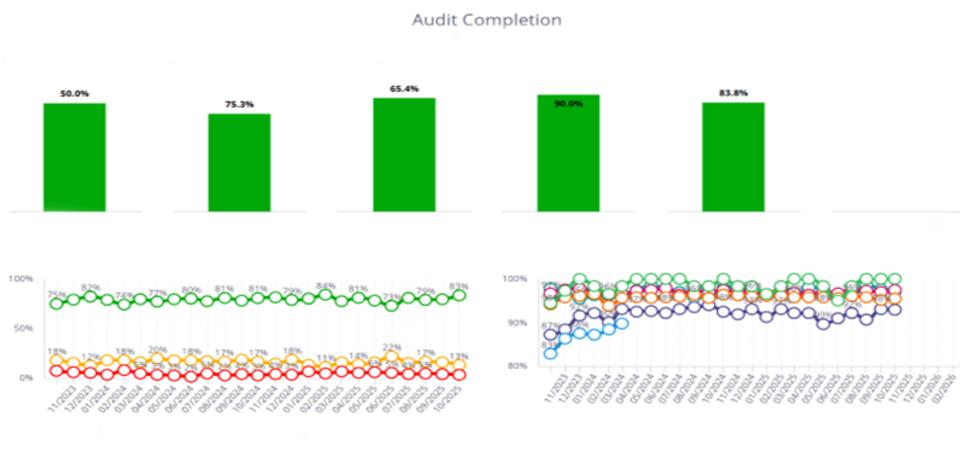
Key outcomes from a data-driven approach to governance after working with Radar Healthcare:
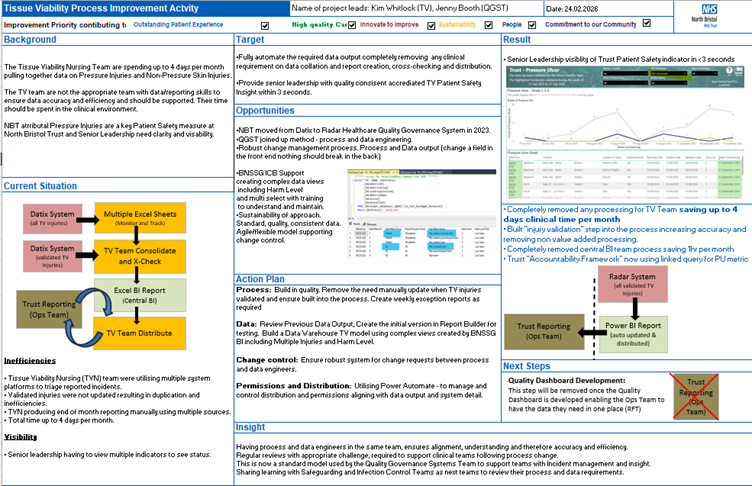
Tissue viability project
The process was fully designed and developed within Radar Healthcare, creating a single system for triage, validation, and management. Built-in validation ensures data accuracy, while a three-second report from Power BI utilising the Radar ODS (Operational Data Store), provides instant visibility and access. Autogenerated reporting improves efficiency, saving an estimated four days of clinical time per month.
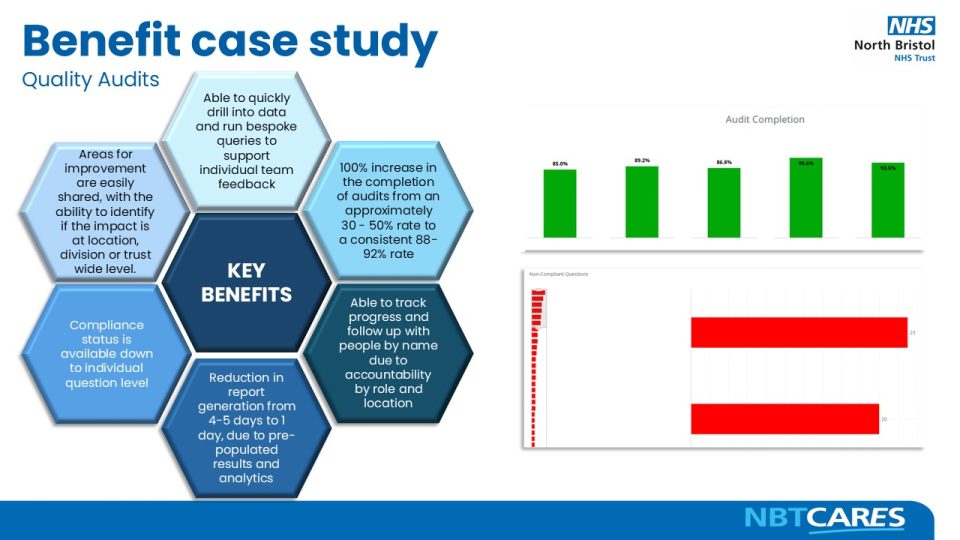
Quality audit completion
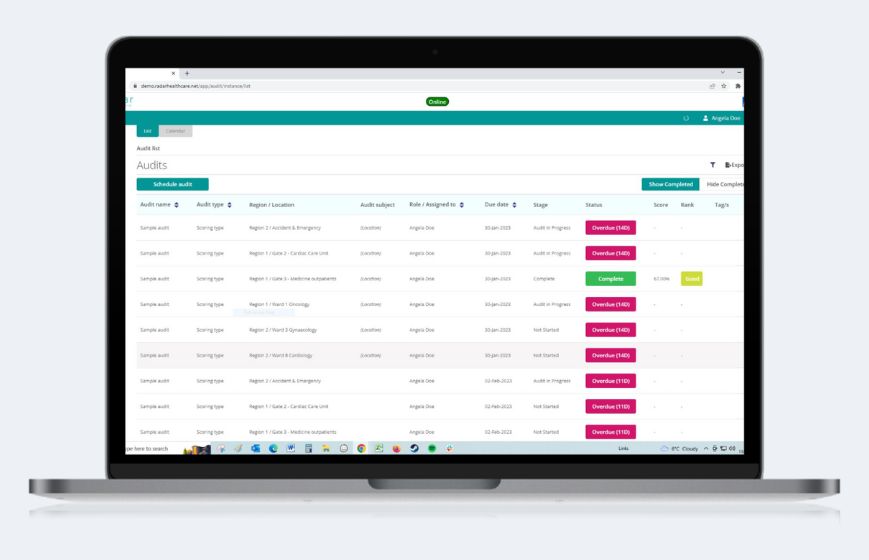
Audit completion has risen from 30-50% to 88-92%, with no cancellations during peak periods and 97% completed in January 2026. Progress and accountability can be tracked at an individual level, while compliance is monitored at the question level. Reporting efficiency has improved, saving 4–5 days per month, and bespoke queries make it easy to identify key areas for improvement and focus.
Working in collaboration
The National NHS Radar Healthcare Data Network brings together data engineers, analysts, and technical leads across trusts to improve incident data processing. By aligning methods and sharing approaches, it ensures consistency, accuracy, and efficiency. The network supports reproducible workflows through structural and digital changes, while enhancing analytical maturity to strengthen decision-making, governance, and collaborative problem-solving across the NHS.
“Radar Healthcare’s User Groups are one of the real benefits of the platform. Speaking to other Trusts, linking specialist teams and sharing processes including in our staging site, gave us the confidence and clarity to move forward.”
Looking ahead: Coming together as an Integrated Care System
North Bristol NHS Trust is moving towards merging with University Hospitals Bristol and Weston NHS Foundation Trust to form an integrated care system. With 28,000 staff and a combined turnover of over £2.2 billion, the Merger will give the team the scale, influence and expertise to transform the way healthcare is delivered locally.
Book your free demo