


Analytics And Reporting In Health And Social Care: Why It Matters Now More Than Ever
Tags:
From Data Overload To Actionable Insights
Health and social care providers are drowning in complex data – from incident reports to patient feedback, audits, complaints, and compliance logs.
The Problem With Siloed Data
Yet too often, this data is siloed, underutilised or only reviewed after a serious event.
The Urgency of Insight-Driven Care
In today’s environment – marked by workforce shortages, rising demand and increasing regulatory oversight – the ability to turn raw data into meaningful insight is a critical differentiator.
This is where powerful analytics and reporting come into play.

-
The Current State of Data Usage in Healthcare
According to a 2023 report by NHS Digital, only 34% of care providers said they had systems in place to consistently use data to drive decision-making. That means the majority are missing out on opportunities to improve safety, outcomes, operational efficiency and data-driven, value-based care.
-
Regulatory Focus on Transparency and Improvement
In parallel, regulatory bodies such as the Care Quality Commission (CQC) are placing greater emphasis on healthcare data transparency and evidence-based improvement. Healthcare providers that can demonstrate a proactive approach to learning from data are better positioned to achieve higher ratings – and ultimately deliver better care and patient health.
-
Expert Perspective on Transforming Data Use
In a recent What the HealthTech podcast episode "The Future of Social Care", Professor Martin Green, CEO of Care England, said:
"Turning data swamps into information lakes is key ... This is about using data to make proactive decisions that benefit both the individual and the system,” referencing the need for meaningful healthcare analytics that guide decision-making." -
The Cost of Not Automating Data Analysis
“Without a solution that automatically manipulates data for you, reporting on what is working well and understanding what could do with improvement becomes difficult, very labour intensive, and potentially inaccurate.”
— Andrew Stevens, Development Director at Kisimul Group
Why Analytics and Reporting Are Essential For Everyone In The Sector
Analytics is no longer just the domain of data scientists or exec teams. With the right healthcare analytics software it becomes a powerful asset for frontline workers, managers, quality and compliance leads, and regulators alike.
And the benefits are endless:
- For clinicians and care professionals:
Get valuable insights on patient demographics, patient data and incident trends, identify risks early and adjust practices accordingly. - For managers and executives:
Gain real-time visibility into performance across sites, services, or regions. - For regulators and commissioners:
See evidence of continuous learning, responsiveness and safe care delivery. - For patients and service users:
Benefit from improved service quality, safety, and patient outcomes based on real-time learning.
How Radar Healthcare Transforms Analytics in the Healthcare Industry
At Radar Healthcare, we believe data should empower, not overwhelm. That’s why our platform is designed to help health and care providers turn scattered information into strategic intelligence – without needing specialist data analysts or degrees in data science.
Centralised, Real-Time Data Analytics
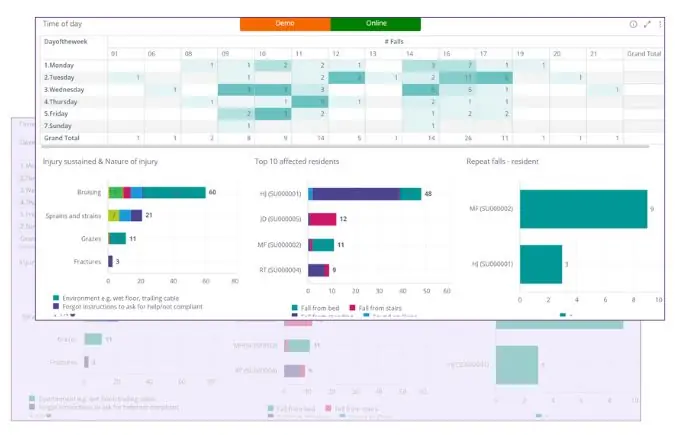
Radar Healthcare brings together multiple data streams – incidents, audits, workforce compliance, clinical data, electronic health records, lab data, claims data, feedback, patient satisfaction, risks – into one integrated system. This allows providers to see not just what happened, but why, and what to do next.
Using intuitive dashboards and real-time reporting, users can quickly answer key questions:
- Are medication errors increasing in one location?
- What’s the most common theme in complaints this quarter?
- Are staff raising concerns over the same issues?
- Is staff training linked to improved audit outcomes?
- What time of day are most of our incidents occurring at and why?
- What is working well in one location and how can we implement it across all healthcare operations in our organisation?
“My favourite bit of all of Radar Healthcare is the pulse functionality because not only can you start to look at your data sets in these custom dashboards that you’ve built, but then you’ve got the ability, per individual user, to set Pulse watches on them. For example, if there are any more instances of Falls in a certain location, you can set a pulse to notify you the minute there is fall recorded in that location. You can also create your own Pulse dashboard of all of the different things that you personally are really interested in looking at and you can make that your default. ”
“Rather than sitting back and waiting to be fed data, staff are using the dashboards to identify their own issues, drill down into specific events, and make informed decisions based on real-time insights.”
“Prior to Radar Healthcare, we had a very poor CQC inspection. The concerns were primarily around governance and documentation. We have yet to have another CQC inspection, however, when the local authority came to review, we were able to provide them with a digital source that evidenced all documents, up-to-date audits, incidents, and ongoing actions, which they were really pleased to see. They were impressed that we were pinpointing issues but then automatically creating action plans and steps to resolve them efficiently and effectively – and that is exactly what Radar Healthcare’s system allows you to evidence and continue to do.”

“One of the primary reasons we went with Radar Healthcare was the access to powerful analytics on top of the ability to create a really customised and simple approach to collecting our event data and our compliance data.”
“We are not just ticking a box for CQC, we genuinely care about what we do and creating the best possible outcomes for patients. Radar Healthcare helps us to do that by shared learning, learning from excellence and highlighting how we have dealt with any issues.”
Data That Works For You
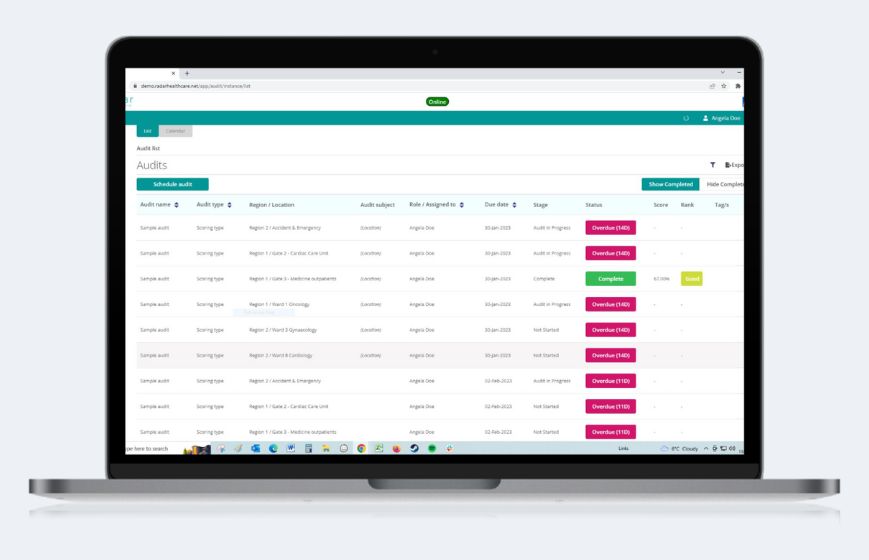
Every organisation has different priorities. Radar Healthcare’s self service system allows users to either use our built-in dashboards or configure dashboards to reflect specific key performance indicators (KPIs), regulatory metrics, or organisational goals.
Want to track response times to incidents? Monitor safeguarding themes across homes? Analyze data on patient flow? Explore the patient journey? Report Concerns? Drill down into audit compliance by region? It’s all possible with our flexible reporting tools.
It’s not enough to know what’s happening – providers need to act. Radar Healthcare supports automated alerts and workflows when thresholds are crossed.
This ensures that issues don’t get lost in spreadsheets or buried in emails, and that the right people are notified at the right time.
And with predictive analytics, predictive modeling and machine learning built in, the system can flag patterns from historical data that may indicate emerging risks – giving you time to intervene before harm occurs.
Radar Healthcare is designed with professional body and regulatory compliance in mind. Whether it’s preparing for CQC or regulatory inspections, evidencing lessons learned, or aligning with the NHS Learning from Patient Safety Events (LFPSE), or Patient Safety Incident Response Framework (PSIRF), our platform makes it easy to demonstrate:
- Transparent healthcare data use
- Evidence of continuous improvement
- Clear audit trails
- Organisation-wide learning
Our close collaboration with our partners and professionals across health and social care helps us shape and refine our product to real-world needs in the healthcare ecosystem.
Through our customer-led groups and forums, we regularly gather insights that directly influence new product features – including our most recent CQC dashboards.
These forums ensure that our advanced analytics tools are genuinely helpful and aligned with evolving sector expectations.
Radar Healthcare recognises that excellence should be just as visible as incidents. By broadening the scope of reporting to include positive outcomes, healthcare organizations can reinforce best practices, boost staff morale, and balance the narrative around performance.
Radar Healthcare’s Incident and Event reporting module makes this easy – allowing users to report excellence, celebrate good practice, and analyse where they can replicate success across the organisation.
This concept is rooted in appreciative inquiry – an approach that focuses on what’s working and how to do more of it to improve quality outcomes.
In our recent podcast ‘The Power of Appreciative Inquiry in Healthcare’, experts Katy Fisher and Kayleigh Barnett shared how this mindset is transforming reporting cultures and inspiring innovation across the sector.
In a fast-moving sector like health and social care, the difference between good and outstanding often lies in how well an organisation uses its data.
Healthcare data analytics and reporting are no longer optional — they are fundamental to delivering safe, effective, person-centred care and ultimately improving patient outcomes.
Organisations that harness health data effectively can not only comply with regulation but also build a culture of continuous improvement, learning and resilience.
At Radar Healthcare, we partner with care providers to make that vision a reality — offering healthcare analytics solutions that are as powerful as they are practical.
True transformation happens when data is not just collected, but actively used to drive improvement, celebrate excellence, boost health outcomes and embed learning into everyday patient care.
The role of big data in supporting better decision-making continues to evolve in healthcare. By embracing advanced data analysis across various dimensions – including clinical outcomes, workforce metrics and patient satisfaction – care providers can gain a holistic view of their operations and performance.
This enables more informed decisions, from identifying high-risk patients to tracking the effectiveness of government initiatives designed to enhance the patient experience and improve patient outcomes.
Driving smarter, safer care through real time insights
With Radar Healthcare’s intelligent reporting tools, organisations can access real time data to support clinical decision making and guide operational strategy.
These powerful insights not only help to streamline processes but also enable teams to take proactive steps to improve efficiency, deliver personalised care and reduce variation in care delivery.
With instant notifications and trend spotting, care teams are empowered to intervene early and prevent harm, ultimately delivering better outcomes for patients and service users.
Supporting predictive healthcare with AI-powered tools
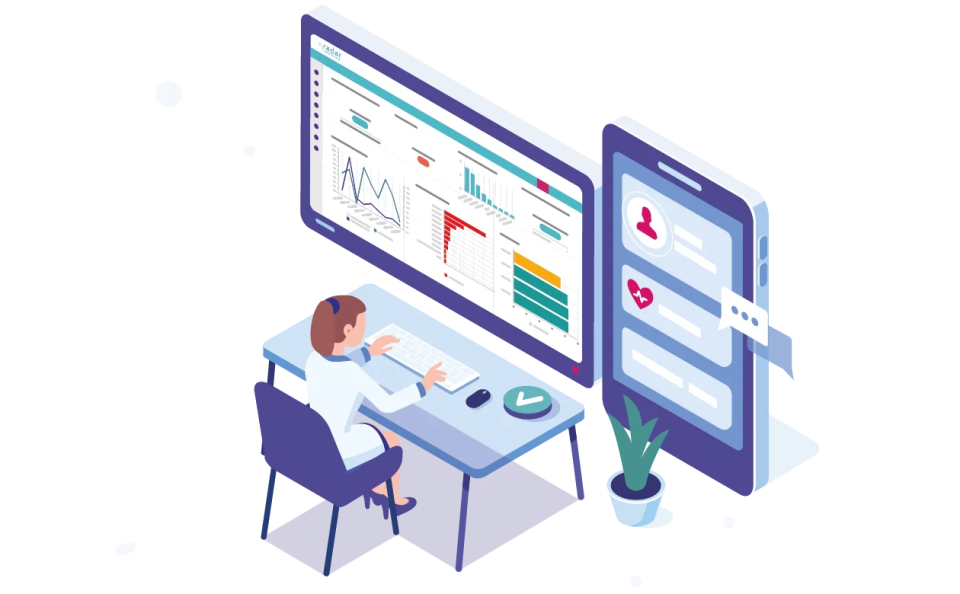
Radar Healthcare’s platform integrates AI-powered technology to support smarter, data-led decisions. From AI powered predictions that highlight emerging risks to intelligent workflows that trigger timely alerts, our tools enable users to stay ahead of potential issues.
This means that clinical information and operational trends can be used to inform planning, allocate resources more effectively and create targeted health plans that reflect patient needs – all while reducing costs and improving system-wide performance.
Customisable analytics for every level of care
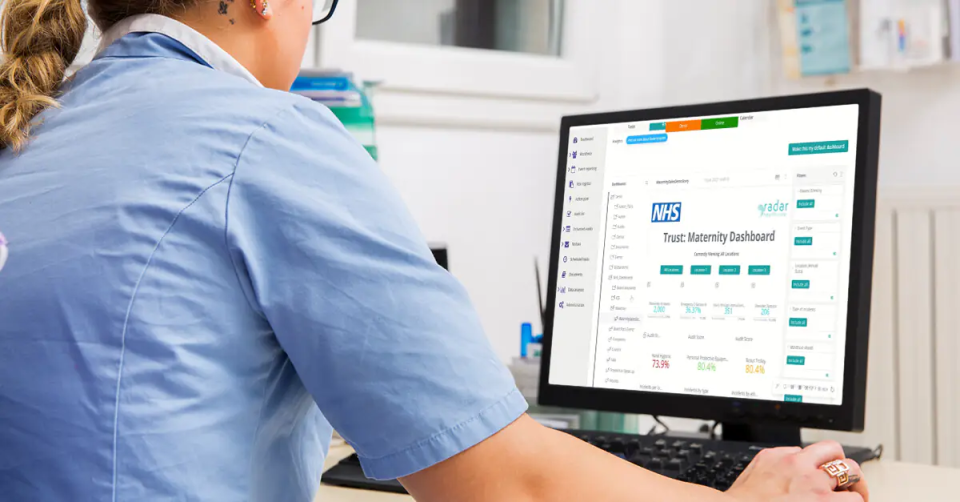
Whether you’re a frontline nurse, compliance officer or senior leader, our customisable dashboards allow you to filter and visualise the data that matters most.
Users can explore insights by location, service type or timeframe – giving every team access to real time insights that drive continuous improvement.
By breaking down silos and promoting shared learning, Radar Healthcare ensures that every stakeholder has the tools they need to contribute to safer, more efficient care delivery.