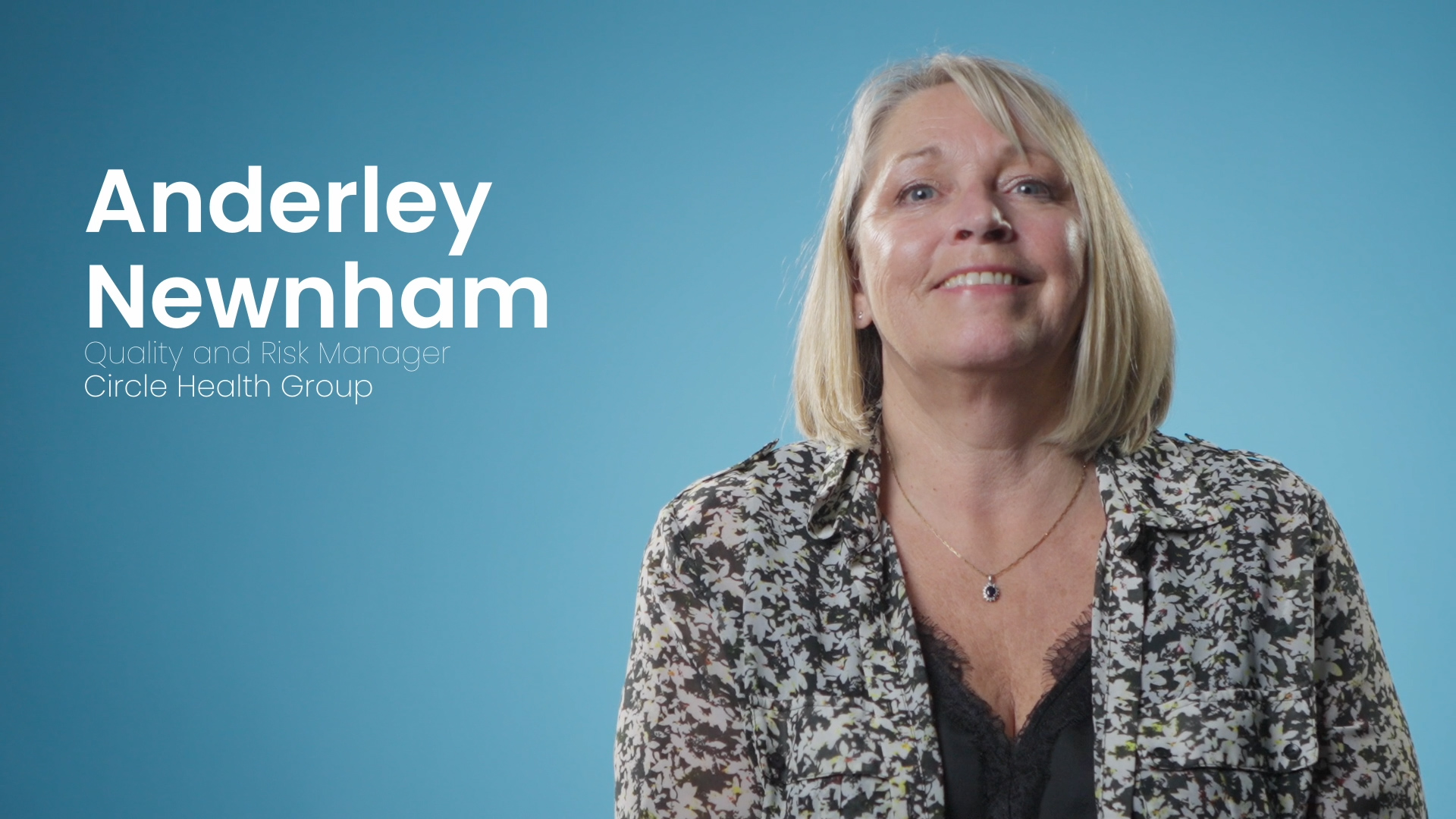


Interview with Donna Doran, Quality and Risk Manager and Infection Prevention Control Lead at Circle Health Group's Harbour Hospital
Q: Can you introduce yourself and your role?
A: My name is Donna Doran and I am a Quality and Risk Manager and the Infection Prevention Control Lead at Circle Health Group’s Harbour Hospital in Poole.
I’ve been in this particular role for two years and have worked at Harbour Hospital for three and a half years now. I’ve really enjoyed working with the team here. I wanted a role that allowed me to work across all departments in the hospital, to take a bird’s-eye view and identify areas where we could improve. I really enjoyed what I was doing within a specific department, but I knew I was ready to expand my role and have a wider impact.
My current position involves working across the entire site. I work with a wide range of people, focusing on quality and assurance and ensuring that patient safety is at the heart of everything we do.
What interests me about infection control is actually closely related to my work in quality and risk. Both areas are about continuous improvement and refining our practices to enhance patient outcomes. It’s all centred on improving care, and the two roles are very much transferable.
Q: What changes have you seen since implementing Radar Healthcare?
A: Absolutely, Radar Healthcare has made a big difference. Day-to-day, it really helps us bring structure and assurance to everything we do.
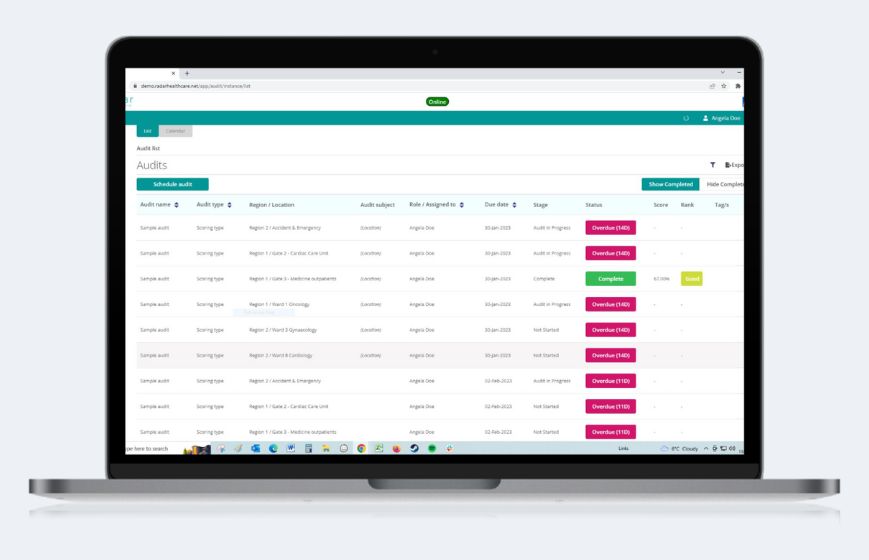
I spend a lot of time working from the task list and attending various meetings throughout the day. These roles are busy and you’re constantly moving between conversations and meetings but Radar Healthcare makes it easy to capture actions as they happen, which reassures me that nothing gets missed or forgotten. Everything is very intentional and followed up because we utilise Radar Healthcare across all of our meetings and activities.
Q: Are there any features you use most regularly?
A: Analytics has completely transformed how I manage my workload.
I use it as soon as I arrive in the morning to review what I need to know for the day. It helps me share key information, whether it’s from the national team or from incidents reported on-site in the last 24 hours. It really sets the tone for the day.
Analytics has also changed how we approach clinical governance. It helps us identify and focus on trends, take a forward-thinking approach, and have more intentional conversations. We can spot patterns on a much more granular level because we can drill down into the detail and that’s what makes the tool so powerful.
Q: Has it made you more productive?
A: Rather than just making us more proactive, it’s helped us use our time better. I’m still working the same number of hours, but the outcomes are now much more measurable and impactful. It’s helping us work smarter.
Q: What kind of changes have you made over the last couple of years?
When I first started this role, we were using a mix of different systems in place of Radar Healthcare. A few months in, we started transitioning to Radar Healthcare initially just for audits and incidents, but it’s grown significantly since then.
There’s been a noticeable shift in how we use outcomes from incidents and audits. Compared to two years ago, we’re now doing much more with those results. Productivity around governance, audits, and incident reviews has improved massively.
Q: Does that have an impact on teams and patients?
A: Yes, absolutely. One of the biggest changes teams have noticed is the improvement in our safety culture. Radar Healthcare helps us hone in on lessons learned, which leads to meaningful quality improvement initiatives. That’s ultimately what governance is all about.
Everyone comes to work wanting to improve patient safety, and Radar Healthcare has really helped us do that more effectively.
Q: Is it helpful to have actions, audits, incidents in one system?
A: Definitely. That’s probably the most valuable feature for me: the way you can link different aspects of governance.
For example, I can connect incidents to the risk register or action plans to specific events. It creates a three-dimensional view of our governance activity, which provides assurance and serves as a valuable resource, for example, for CQC inspections or internal reporting. You can clearly see how audits relate to incidents, and how those relate to risk. That interconnectivity helps you understand the full picture.
Q: Were you able to do that before?
A: No, not really. Before, we used different platforms for each element, and they didn’t interface with one another, or did so very minimally. Demonstrating those connections between different aspects of governance was much harder than it is now.
Q: Has this made the data more valuable or actionable?
A: Yes, 100%. Being able to link different pieces of data means we can cross-reference audit outcomes with incident data.
Also, multiple people can contribute to a single case. For example, a theatre manager and a ward manager can both work on an incident because they have access and workflows within the system. So, the outcome isn’t based on just one person’s input—it’s a collaborative process. That creates a much more holistic and team-based approach.
Q: Do you find the system easy to use?
A: I do and it’s getting easier the more I use it. It’s worth investing time to explore the platform and get familiar with it. Don’t be afraid to click around and learn what each part does. I’d encourage anyone using Radar Healthcare to be curious and try things out, explore connections, and get the analytics working to your advantage.
It’s a user-friendly system, but the more you engage with it, the more you’ll get out of it.
Q: How has it changed your day-to-day work?
A: It’s transformed how I structure my day. From the way I conduct incident reviews to how I carry out audits, Radar Healthcare has reshaped all of that.
It’s embedded into the way we work and has changed how I think about incident reviews. It’s doing that for everyone, whether they realise it or not. It’s helped me take a new, more structured approach to how I work.
Q: Has it helped with committee work and sharing information?
A: Definitely. As part of my role, I attend most of the hospital’s committees and present a lot of data.
Radar Healthcare’s analytics feature has made that data much more accessible, not just for me, but also for our HoDs and CSMs. Even if I’m not chairing a meeting, others can access and use the data I would normally have to collect and share myself.
Our discussions have become more organic and wide-reaching. We’re not focusing on one incident; we’re taking a broader view to understand where the service is going and what changes will have the most impact. The graphs and visualisations help teams digest the data and see trends much more easily.
Q: How has it changed communication, especially with national teams?
A: Radar Healthcare has allowed us to move away from relying on email for certain things.
We now use event tasks and action plans to set clear objectives and deadlines. That helps everyone know exactly what’s expected of them and by when. It’s helped align our site-wide and national communications. Everyone is on the same page, which helps us work more efficiently and ensures there’s a shared understanding of expectations, especially regarding timelines for tasks.
It’s also helped us stay compliant with our incident and complaints management processes.
Q: Has better tracking and oversight led to improved outcomes or compliance?
A: Yes. The automation within Radar Healthcare especially the timelines for workflows related to incidents and complaints helps keep us aligned with policy and regulatory expectations. It ensures we don’t miss deadlines, which is critical in governance. We’ve also embedded ways to capture positive outcomes like compliments or examples of good care which we can then feedback to staff. That’s really important for culture. We don’t want to only focus on negative outcomes.
Radar Healthcare helps us highlight what went well, as well as what needs improvement, and share that with teams. Staff really value hearing the positive, and it supports a healthier, more balanced culture.
Q: How do you share lessons learned with staff?
A: Radar Healthcare allows us to compile all of our lessons learned into a report. We then export and present those learnings to staff, often through infographics or newsletters.
That process would be much harder without a system like Radar Healthcare to collect and consolidate that information in a meaningful way.
The whole point of incident reviews is to learn, if we’re not doing that, there’s little value in the process. Radar Healthcare helps us extract and share those insights so we can improve care and prevent similar incidents in the future.
Q: What feedback have you had from others in the hospital?
A: Most of the feedback I’ve received has come from our clinical service managers and HoDs. They’ve said they really appreciate the oversight they now have over their departments. They also love the department-specific reports we generate through analytics and how easy it is to view data in graphs and digestible formats, which they can then share with their teams. It’s something they’d like to see even more of and we’re working on delivering that.
Q: What advice would you give to others starting to use Radar Healthcare?
A: My biggest advice would be to take the time to really get to know the system. Click around, explore, and don’t be afraid to test things out. When we were rolling it out in the hospital, I wish I’d been more available on the floor to answer staff questions in real time. We provided a lot of upfront training, but staff needed ongoing support while using it and that’s something we’ve now learned to build in.
Q: What’s your favourite feature?
A: The Clinical Governance Dashboard. I use it every month to support our governance reporting. It streamlines my workload and means I don’t have to create graphs manually. Everything I need is all in one place, it’s a one-stop shop for preparing for committee meetings. That’s definitely my favourite feature.

Interview with Simon Geoghegan Head of Clinical Data Reporting and Governance Systems at Circle Health Group
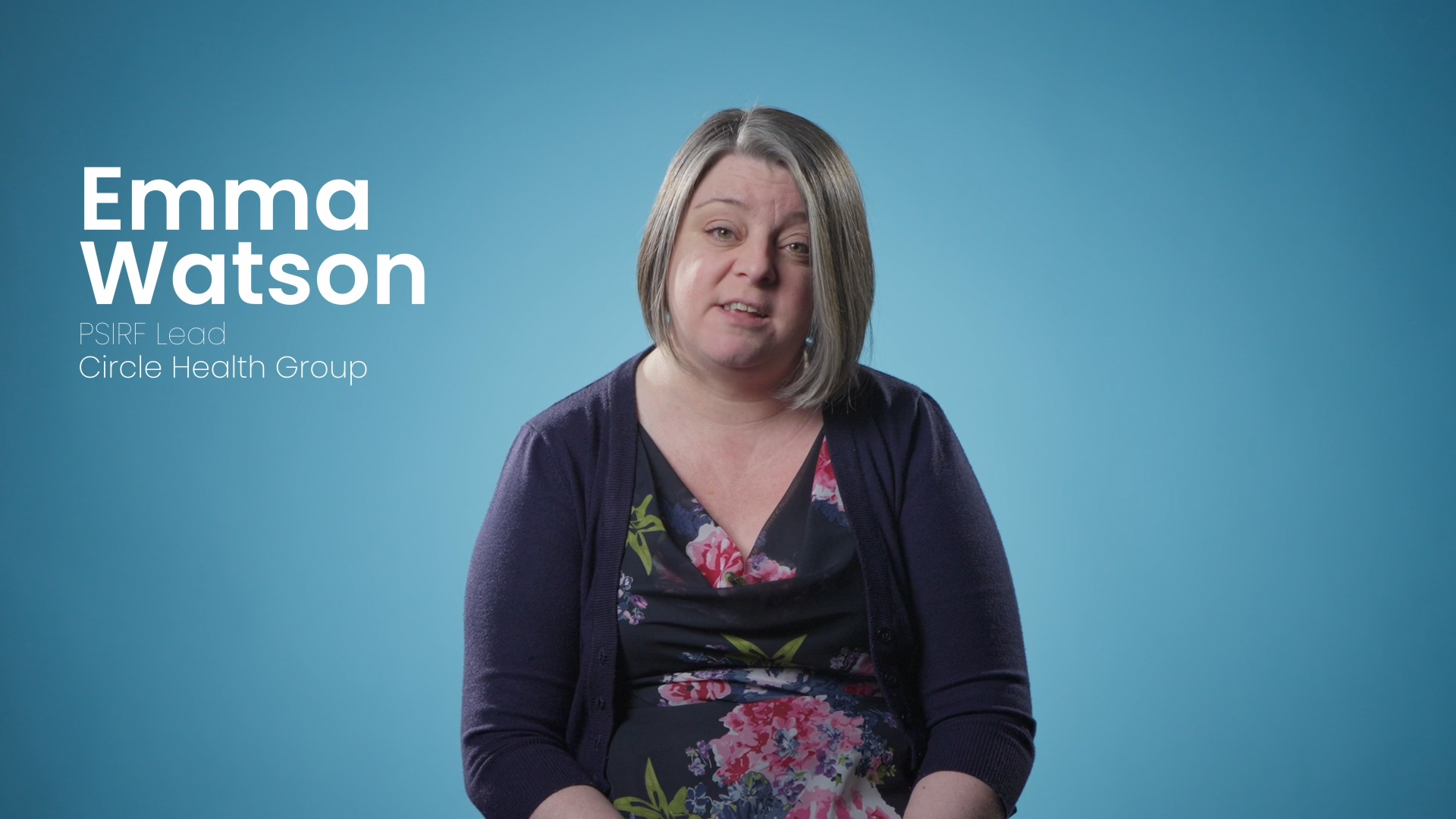
Embedding PSIRF at Scale: Interview with Emma Watson, PSIRF Lead
Interview with Sharon Stewart, Director of Clinical Governance and Quality Improvement, Circle Health Group