

Working Together to Shape Safer, Smarter Care: Key Takeaways from Our User Group Summit
Highlights from Our First User Group Summit
On 6th February 2026, Radar Healthcare hosted our first User Group Summit. The event brought a large number of our partners together, under the theme ‘Behind every success story is a partnership we are proud of’ and created a space for open discussion, shared learning, and genuine collaboration.
The day featured a series of speaker sessions designed to create thought provoking conversations, share real world experiences, and highlight how our partners are driving meaningful improvements in patient safety across their organisations.
Hosted at the Wellcome Collection in London, a Museum of Health and Human Experience dedicated to collaboration and shared learning, the venue was the perfect match for our User Group Summit and our expanding partnerships across the healthcare continuum.

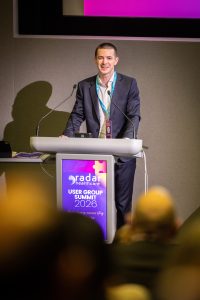 Opening Keynote – Beyond the Checklist: Shaping the Future of Healthcare Together
Presented by Edward Bellamy, CEO of Radar Healthcare
Our first session of the day was an opening keynote from Edward Bellamy, CEO of Radar Healthcare, where he set a clear focus on the significant challenges and opportunities shaping the future of health and social care.
Drawing on insights from the World Health Organisation, he highlighted the growing workforce pressures facing the sector, noting the substantial global shortages projected over the coming years and the increasing number of vacancies across both social care and the NHS. Combined with rising levels of staff burnout, these pressures create an environment of uncertainty and fragmentation that impacts both patient safety and quality of care.
Against this backdrop, he emphasised the importance of strong leadership, shared accountability, and the need for organisations to come together to support both patients and frontline teams. Edward also shared key milestones from the past year at Radar Healthcare, including continued growth in platform usage (160,000 active users across more than 20,000 locations), strong engagement from partners, and further success following the integration with EIDO Healthcare. He noted that organisations using Radar Healthcare and EIDO together are better equipped to reduce risk, with EIDO Patient Information remaining the only consent software to have been successfully relied upon as evidence in the High Court in London.
Edward then highlighted ongoing platform development, including a wide range of feature enhancements, quality‑of‑life improvements such as editable audit schedules and the new skip‑audit option (currently in beta), as well as sustained investment in speed and performance. Looking ahead, he noted that technology and AI, when used responsibly, will play an increasingly important role in helping teams achieve more with limited resources in the Radar Healthcare platforms.
Edward concluded by emphasising that the safety and wellbeing of the people and patients who our customers serve must and will remain at the heart of all of our day to day focus and innovation.
Panel Discussion: One Shared Goal to Improve Patient Safety
Speakers: Simon Geoghegan, Head of Clinical Data Reporting and Governance Systems (Circle Health Group); Mary Cregg‑Lock, Clinical Lead for Digital and Transformation (Ramsay Health Care); Chris Drinkall, Head of Clinical Governance (Nuffield Health)
The User Group Summit continued as we welcomed Simon Geoghegan from Circle Health Group, Mary Cregg-Lock from Ramsay Health Care and Chris Drinkall from Nuffield Health for a conversation about collaboration in action. They discussed how teams across their organisations work together, compare insights and learn from each other to improve patient safety. With Radar Healthcare’s User Groups as a shared forum, the discussion showed how aligned processes and practical peer support drive meaningful change and better patient outcomes.
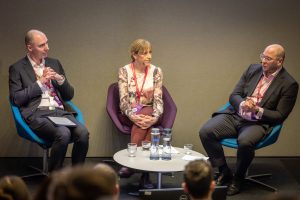 Chris opened the session by discussing why Nuffield Health use Radar Healthcare. He praised the platform’s usability and the value of automating LFPSE reporting. Chris also spoke on Radar Healthcare’s focus on partnership working, describing it as feeling like “Nuffield has expanded its quality team.” Mary highlighted the visibility Radar Healthcare provides across Ramsay Health Care’s 34 hospitals, helping teams understand trends, break down siloes and identify issues earlier, all fundamental to maintaining and improving safety. Simon reinforced this idea, remarking that “the one thing we all have in common is patient safety and we do not want to compromise on that”. He also noted the importance of working together to improve patient safety and that open collaboration only makes that commitment stronger.
When asked how they know that patient safety is genuinely improving, all three panellists focused on contextual, meaningful data. Simon explained that understanding incidents alongside intuitive dashboards helps teams learn how to use the system effectively and allows them to spend more time with the people they care for, stating the importance of easy-to-use systems as “nurses should be nurses”. Chris described how Nuffield Health uses Radar Healthcare insights to spot anomalies at their sites, carry out deep dives, and learn from low and no harm events before they escalate. Mary then reflected on how Ramsay Health Care have adopted PSIRF with Radar Healthcare and can go deep in the system across hospital and organisational levels to track harm, outcomes and themes, and to celebrate good practice.
The discussion moved onto how their organisations manage activity within Radar Healthcare with the actual number of events reported. Mary described clustering data within their system to make comparisons across hospitals, Simon explained how Circle Health Group breaks information down by speciality to provide richer context and Chris highlighted the value of presenting data clearly for boards who may not be statistical experts.
A dedicated part of the conversation explored how Radar Healthcare’s User Groups specifically support patient safety. Chris noted that relying solely on internal reporting can create informal confirmation bias, whereas partnership working and discussing experiences with teams at other organisations helps Nuffield Health move forward quickly in terms of patient safety. Simon emphasised the opportunity User Groups offer to influence the platform’s development, particularly how organisations use LFPSE. Mary highlighted the importance of having a trusted space to share challenges and learn, with Radar Healthcare actively listening and taking recommendations on patient safety back into product development.
The session concluded with reflections on keeping User Groups inclusive, varied and valuable. All three panellists agreed that involving colleagues from independent healthcare, social care and the NHS prevents echo chambers and provides richer safety insight. They also suggested ways to support new users and helping teams newly integrating Radar Healthcare. As Mary noted, hearing from organisations who already use Radar Healthcare could help teams move more quickly towards safer care.
Supercharging Your Effectiveness
Presented by Jo Banks, Executive Coach and Leadership Development Trainer, and founder of What Next Consultancy Ltd
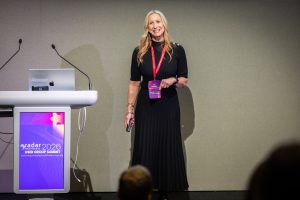 Following the lunch break, this session shifted focus onto something that affects everyone working in health and social care, the impact of relentless change and how it shapes our wellbeing. Delivered as a way for Radar Healthcare to give back to our users, Jo explored why constant change can feel exhausting. She highlighted that humans simply aren’t wired for the level of uncertainty, speed and pressure that many teams now experience daily. Jo explored how the brain’s natural response to unpredictability can trigger feelings of stress, anxiety and overwhelm, and how the body enters survival mode, whether through fight, flight, freeze or fawn responses.
Jo also examined how the pace of modern life, exemplified since the pandemic, contributes to what many now describe as change fatigue. When our nervous system is under chronic strain, decision-making becomes harder, concentration dips and motivation declines. Left unchecked, this can lead to symptoms such as low mood, disrupted sleep, emotional numbness, physical tension and burnout. By recognising these signs early, individuals and organisations can create healthier boundaries and support their teams more effectively.
To help partners look after themselves in a world of constant change, the session closed with practical strategies that are simple but immensely effective. Getting the basics right – sleep, nutrition, hydration, movement and daylight – can significantly reduce the physiological impact of stress. Above all, Jo reminded everyone that it is okay to ask for help, and that no one is designed to navigate continuous change alone. This session served as an important moment of reflection in the day, reinforcing Radar Healthcare’s commitment to not only supporting and improving care outcomes, but also the wellbeing of those delivering the care.
Turning Insight into Action
Presented by Jenny Booth, Quality Governance Systems Manager, North Bristol NHS Trust
Jenny Booth from North Bristol NHS Trust, shared a powerful example of how Radar Healthcare is helping the organisation turn insight into meaningful action. When the Trust first procured Radar Healthcare in 2021, processes were fragmented and disconnected, with duplication and inconsistency creating challenges for both operational oversight and safety governance. By adopting a single, end-to-end framework through Radar Healthcare, the Trust has been able to streamline processes, establish a single source of truth and embed shared learning across teams, all with the aim of generating the data-driven insights needed for effective decision making and continuous improvement.
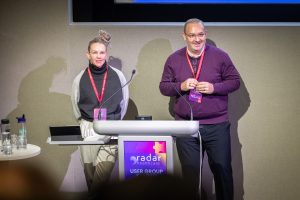 A key part of their journey has been the ability to learn from others. Jenny highlighted the value of Radar Healthcare’s User Groups, describing them as “one of the real benefits” of the platform. Speaking to other Trusts, testing different processes in North Bristol NHS Trust’s staging site and hearing how others have approached similar challenges gave the Trust the confidence and clarity to move forward. This approach has supported improvements in incident reporting, event management and Freedom to Speak Up, and played an important role in preparing for the Trust’s LFPSE V6 go live in July 2025, which successfully maintained reporting rates and improved feedback loops for staff. Over 70 process changes have already been implemented, with Jenny noting how quickly Radar Healthcare responded to support the Trust’s progress.
Jenny also shared several measurable outcomes, including a Tissue Viability project that uncovered inconsistencies, which led to a redesign of processes and resulted in four days of clinical time saved per month, time that now goes back to patient care. Quality Audits have seen equally strong results, with completion rates rising from 30-50% to a sustained 88-92% after working with Radar Healthcare.
AI and Clinical Safety: Why Fairness is Performance
Presented by Emma Kitchener
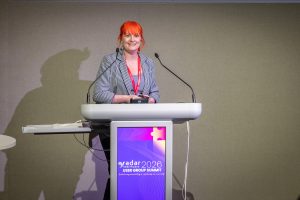 The next session focused on the fastmoving world of AI and explored how organisations can approach new technologies with clarity and confidence. Emma began by noting that AI is everywhere, but not all tools are created equal and stated that some claims about performance or intelligence can be overstated, making transparency essential. Partners were encouraged to look for clear descriptions of how any AI system works, as the ability to explain a tool’s behaviour is not only best practice, but a legal requirement. As Emma put it, “If you don’t understand it, you can’t explain it.”
Emma also emphasised the importance of choosing AI tools that genuinely fit the problem they are intended to solve. Ignoring human factors, or adopting technology simply because it is fashionable, can lead to inconsistency, workarounds or systems that become a false economy. Staff adoption matters, if teams don’t want to use a tool, they are likely to bypass it, use it inconsistently or feel they need to ‘babysit’ it. Human oversight remains essential, especially given our natural tendency to trust computer outputs, and the speaker stressed that suppliers have a duty of care to design responsibly and ensure AI is both necessary and proportionate.
The session also highlighted the importance of asking the right questions when evaluating AI, including performance metrics and how different user groups experience the tool. Examples illustrated how models can behave differently across voice types, genders or neurodiverse users, reinforcing the need to consider a wide range of real world scenarios. Emma stated it is important to stay curious, challenge assumptions and make sure any AI system is transparent, explainable and genuinely supportive for the people using it.
Optimising Safeguarding and the Performance of Care
Presented by James Baker, Operational Systems Product Lead, Achieve Together
The final session of the Summit was led by James Baker, Operational Systems Product Lead at Achieve Together, who shared how the organisation is optimising safeguarding workflows and improving the overall performance of care through Radar Healthcare. Having used the platform for three years, Achieve Together recorded more than 35,000 events in 2025, giving James and his team the insight they needed to drive meaningful improvements. He explained how adding behaviour observation codes helped quality teams interpret data more effectively, and why removing unnecessary duplication within safeguarding processes became essential for releasing time back to staff.
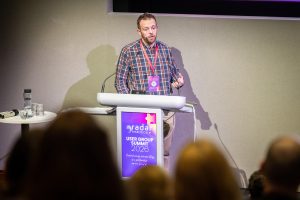 Previously, safeguarding events were being recorded twice, once as an event and once as a safeguarding event. This created additional admin, took time away from debriefs and supporting both staff involved in the safeguarding event.
In February 2026, Achieve Together launched a new, fully integrated safeguarding workflow within Radar Healthcare, removing duplication and making it immediately clear whether an incident meets safeguarding criteria.
James described the impact as transformational, managers now complete safeguarding actions with a single click rather than multiple manual steps, reducing the margin for error and saving significant amounts of time. The new workflow has been proved beneficial for Achieve Togethers data insights, as James states, “It very clearly tells us if it’s a safeguarding event or not, it has greatly improved our reporting.”
James ended his session by highlighting that as well as improving their reporting, the new workflow has been “something managers have wanted for a long time”, and that future plans will see it expand across additional event types.
Creating a Community
Throughout our first User Group Summit, key themes ran across every session: collaboration, shared learning, and a commitment to safer, better care for patients and those delivering it. A clear takeaway, is that progress happens the most effectively when we work together. As Rhian Bulmer, Chief Customer Officer at Radar Healthcare, so aptly put it in her closing remarks, “We all need communities and we’ve created one here today. We should all be so proud of what we’ve created and where we’re going.” It’s a sentiment that truly captured the spirit of the event, and the momentum our team and partners carry forward.