


People First, Technology Second: How Ramsay Health Care UK is Transforming Patient Safety
We recently had the pleasure of welcoming Jo Dickson, Chief Clinical and Quality Officer at Ramsay Health Care UK, to join a panel discussion at the Patient Safety Congress and again on our What the HealthTech podcast.

Ramsay Health Care UK:
Exclusive Interview on the Radar Healthcare Partnership
We recently had the pleasure of welcoming Jo Dickson, Chief Clinical and Quality Officer at Ramsay Health Care UK, to join a panel discussion at the Patient Safety Congress and again on our What the HealthTech podcast.
During these conversations, Jo shared invaluable insights on the importance of prioritising people and processes before implementing technology. Ramsay Health Care UK has successfully adopted a “People First, Tech Second” approach, ensuring that digital transformation empowers rather than replaces healthcare professionals.
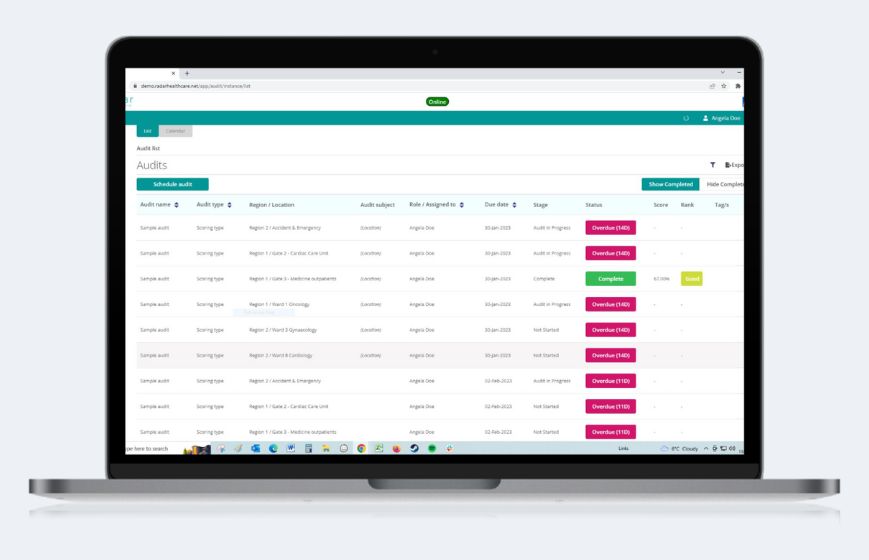
A key part of this strategy has been Radar Healthcare’s risk, quality, and compliance software, which has helped Ramsay drive patient safety, transparency, and efficiency across their 34 hospitals.
Summary of Success:
-
Real-Time Incident Response with PSIRF
With Radar Healthcare, Ramsay has transitioned to real-time learning and action, using the Patient Safety Incident Response Framework (PSIRF) to rapidly address safety concerns. Jo says: "With PSIRF, the learning is real-time. We can implement new processes immediately so that the next patient is safer than the last one."
-
Improved Visibility & Data-Driven Decision-Making
Radar Healthcare’s centralised data platform provides instant visibility across all hospitals, allowing leaders to identify trends and drive improvements efficiently. "I can’t be in all 34 hospitals at once, but with technology like Radar Healthcare, I have real-time oversight of patient safety, risk, and compliance - without needing to be on-site."
-
Fostering a Just Culture & Staff Empowerment
Radar Healthcare supports Ramsay’s Speaking Up for Safety initiative, enabling staff to report concerns quickly and easily, reinforcing a transparent, blame-free culture. "It doesn't matter what your role is - you are empowered to speak up and say, ‘I want everyone to be aware of this.’ That’s the foundation of a just culture", says Jo.
-
AI-Powered Insights for Proactive Safety Measures
By leveraging AI-driven analytics within Radar Healthcare, Ramsay can track trends in incidents, complaints, and even compliments, ensuring continuous improvement: "We talk a lot about 'never events' in healthcare. But I’m actually much more interested in 'always events' - what should patients always experience? AI helps us analyse compliments and identify what truly matters to patients."
-
Enhanced Collaboration Across Teams & Sites
Radar Healthcare’s cloud-based system ensures that learnings from one hospital can be shared instantly across all locations, driving organisation-wide improvements. Jo says: "We regularly receive calls from teams saying, ‘We had this incident, here’s what we learned - can we share it more widely?’ That’s the power of real-time learning with Radar Healthcare."
"I can’t be in all 34 hospitals at once, but with technology like Radar Healthcare, I have real-time oversight of patient safety, risk, and compliance - without needing to be on-site."
Enhancing Patient Safety Across 34 Hospitals
With 34 hospitals across England, Ramsay Health Care UK is responsible for providing high-quality, safe, and effective patient care at scale. Managing clinical safety, operational efficiency, and patient experience across such a vast network requires a robust, data-driven, and people-focused approach.
For Jo Dickson, Chief Clinical and Quality Officer at Ramsay Health Care UK, ensuring consistent patient safety is a top priority – but she knows that technology alone isn’t the answer: “My job in being responsible for 34 hospitals is made so much easier by technology. If I was doing it without technology, I would be having to go to every one of those hospitals regularly. Whereas because of the great technology that we’ve got in use, I can remotely do quite a lot of the things that I used to have to do in person.”
Jo continues: “When teams can easily share learnings across multiple hospitals, it accelerates improvement and helps us prevent issues before they happen… We’re creating a shared language around patient safety, so no matter where you are in the organisation, you’re working towards the same goal with the same understanding.”
Despite the advantages of digital transformation, Ramsay Health Care recognised that introducing new technology without first reviewing processes and engaging staff could create barriers rather than solutions. Their mission was clear:
- Empower staff to improve safety processes before integrating technology
- Ensure that AI and automation enhance, not replace, human decision-making
- Use real-time insights to drive immediate improvements in patient safety
“The visibility that Radar Healthcare provides is absolutely key. It allows our local teams to take action while giving our senior clinical team the insights needed to support and guide improvements efficiently.”
A People-First Approach to Technology
Ramsay Health Care adopted a “People First, Tech Second” strategy to digital transformation, ensuring that every technological tool was designed to support and empower clinicians, not replace their expertise.
Jo says: “The thing that I learned most during the time working on clinical technology projects and that I absolutely use every time is that it is people first and technology second… You must change the processes before you change the technology. Otherwise, everyone will think the problem is the tech – but it’s almost always about the people and the process.”
Rather than simply layering technology onto existing workflows, the team prioritised understanding staff challenges, refining processes, and embedding a culture of safety and transparency.
Jo states: “We don’t just want tech-savvy staff involved in implementation. We need to include those who might be hesitant or less digital-literate because they are the ones who will ultimately be using the system.”
Ramsay Health Care worked closely with both their internal stakeholders and the team at Radar Healthcare to ensure the successful rollout of the software – maximising its impact, reducing the risk of additional challenges, and ensuring it was well-received by staff. By prioritising collaboration, open communication, and shared goals, the implementation process became more than just a software deployment; it became a true transformation in how patient safety, risk, and compliance are managed.
Key Steps in Ramsay’s Approach:
- Reviewing current processes before adding technology: “Look at your processes. Are they working for your colleagues, for your team, for patients? Or are you putting blockers in that don’t need to be there?”
- Empowering staff to speak up for safety: Encouraging every team member, from junior staff to senior consultants, to flag concerns without fear of blame.
- Using AI-driven insights: Leveraging real-time data analytics to identify trends, improve decision-making, and enhance patient care.
- Fostering a Just Culture: Moving away from blame-based investigations to a learning-based incident response framework.
"We regularly receive calls from teams saying, ‘We had this incident, here’s what we learned - can we share it more widely?’ That’s the power of real-time learning with Radar Healthcare."
The Impact: Real-Time Learning and Safer Care
Ramsay Health Care has seen significant improvements in patient safety and staff engagement by embedding technology into their people-first strategy.
Faster Incident Response
By implementing the Patient Safety Incident Response Framework (PSIRF) into Radar Healthcare, Ramsay Health Care has shifted from reactive, months-long investigations to real-time learning and action.
Jo says: “It used to be that you’d get information about an incident 3 to 6 months after it happened. With root cause analysis, it would take 90 days, and then the report would go through several committees before frontline staff even saw the learnings. That’s not the case anymore. With PSIRF framework in Radar Healthcare, we are in a better position to adopt a much more proactive model.”
Now, incidents are reviewed immediately with hot debriefs and after-action reviews, allowing for instant process improvements that impact patient care the very next day.
Jo continues: “With PSIRF, the learning is real-time. We can implement new processes immediately so that the next patient is safer than the last one.”
“Radar Healthcare has been invaluable in helping us learn from incidents in real time. The ability to quickly share insights across our hospitals means we can implement improvements almost immediately, enhancing patient safety across the board.”
Empowering a Just Culture
To create a culture where staff feel safe speaking up, Ramsay Health Care implemented “Speaking Up for Safety”, ensuring that every team member, regardless of seniority, has a voice in patient safety. Jo says: “It doesn’t matter what your role is within that setting – you are empowered to speak up and say, ‘I want everyone to be aware of this.’ That’s the basis for a truly just culture.”
By fostering an open, transparent environment, the team has moved away from a blame-focused approach to collaborative learning and continuous improvement.
Jo states: “A lot of healthcare organisations had and still have a blame culture. Moving to a ‘Just Culture’ is incredibly difficult, but essential for safer care.”
AI and Data for Smarter Decision-Making
By using AI-driven trend analysis, Ramsay Health Care can identify risks, improve efficiency, and enhance patient experiences – without losing the human touch. “I use AI, but only for the first step. Human validation is key”, says Jo.
One powerful example is how Ramsay is using AI to analyse patient compliments alongside complaints: “We talk a lot about ‘never events’ in healthcare. But I’m actually much more interested in ‘always events’ – what should patients always experience? We use AI to analyse our compliments and identify what’s really working well.”
By understanding what works well, Ramsay can replicate and scale best practices across its hospitals.
Creating a workplace culture that values both positive feedback and constructive discussions helps drive growth and innovation. This approach encourages employees to develop their skills, work collaboratively, and continuously learn. It also helps shift the focus away from blame, promoting problem-solving and ultimately leading to a more supportive and effective workplace.
We use Radar Healthcare not just for patient safety events and risk management but also to track compliments. The ability to analyse trends in both complaints and positive feedback helps us identify 'always events' - those key moments that truly matter to our patients.”
The Future of Tech in Healthcare
As Ramsay Health Care continues to advance its digital strategy, the focus remains on keeping people at the heart of every innovation.
By prioritising people while strategically leveraging technology, Ramsay Health Care UK has created a safer, more transparent, and collaborative healthcare environment. Their “People First, Tech Second” approach is proof that the best digital transformation starts with understanding people, refining processes, and using technology as an enabler – not a replacement.
Ramsay Health Care is proving that when people and technology work together, the result is safer, smarter healthcare for all.
Book your free demo today