

Customer Spotlight: University Hospitals Birmingham NHS Foundation Trust
 From data to action: leveraging electronic systems to build safer care
Speaking at the University Hospitals Birmingham NHS Foundation Trust Learning and Innovation Summit, Abraar Mirza, Radar Manager at the Trust shared insights into the organisation’s digital transformation journey.
He described it as “something of a rollercoaster – but a positive one,” reflecting on the progress made through strong collaboration with partners, including North Bristol NHS Trust, and close partnership with the teams at Radar Healthcare.
Over time, the Trust has developed a more connected, data-driven approach, shaped by shared learning, iterative improvement, and continuous refinement of systems and processes.
This article explores that journey, the impact to date, and what comes next.
Why we moved to Radar Healthcare
If we rewind a few years, the key question was: why move at all?
For around 20 years, parts of the organisation had been using legacy systems that limited how we could use data. The technology was outdated, functionality was restricted, and we had effectively reached the ceiling of what those systems could offer.
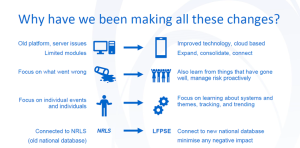 We needed a way to:
🔗 Bring multiple processes into a single system
📊 Make data easier to access, analyse, and learn from
🔒 Meet evolving IT and security requirements
Radar Healthcare stood out because it could support all of this, particularly through its cloud-based model, regular updates, and ongoing enhancements. This was a significant shift from our previous system, where updates were infrequent and we were largely constrained by the technology.
At the same time, national requirements were changing. The transition from National Reporting and Learning System (NRLS) to Learn from Patient Safety Events service (LFPSE) meant we needed to ensure compliance with new reporting standards.
Rather than simply adapt our existing system, we used this as an opportunity to consolidate processes and modernise our approach.
Incident Reporting: what we’ve achieved
In July 2024, we went live with Radar Healthcare’s incident management module and successfully integrated with LFPSE.
Since then, we’ve introduced several improvements:
- Single sign-on, removing the need for multiple passwords
- Learning from Excellence, capturing positive as well as negative events
- Patient and staff lookup integration, reducing manual entry and errors
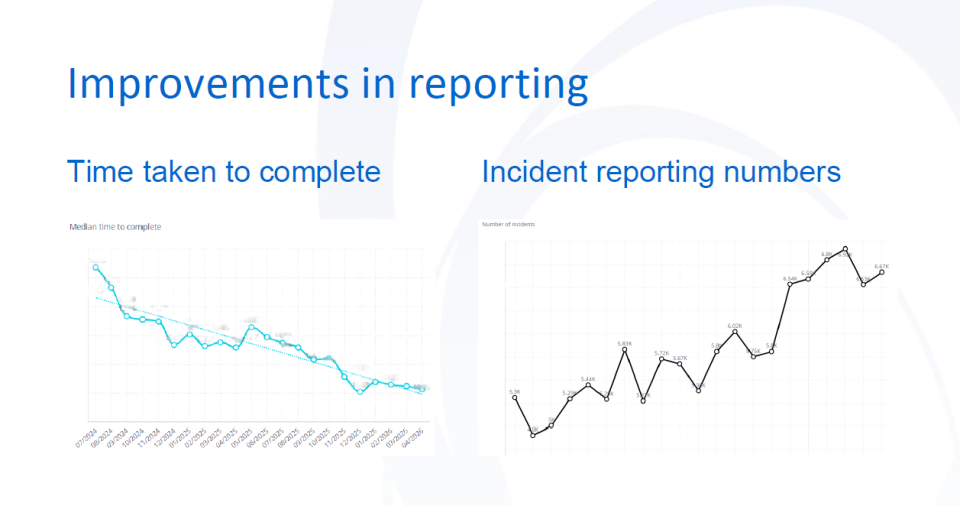
The impact has been significant:
74,000
incidents reported in the last financial year
1,300+
positive (LFE) reports, reinforcing a more balanced reporting culture
While higher reporting numbers might seem counterintuitive, they reflect a stronger, more open safety culture.
Improving efficiency and user experience
One of the early challenges was reporting time. Initially, it took around 15 minutes to log an incident.
Through system improvements and user feedback, we’ve reduced that to around 10 minutes, even while introducing more detailed national reporting requirements.
We’ve also:
- Automated incident allocation to the right teams
- Enabled shared access for faster collaboration
- Introduced structured review processes within 24–48 hours for significant events
This has helped ensure incidents are managed more consistently and in a more timely way.
Embedding learning into practice
We’ve strengthened how we learn from incidents by embedding structured approaches, including:
🔍 Swarm-based reviews for rapid learning
⚙️ Systems-focused analysis (rather than individual blame)
📊 Integrated workflows that capture learning directly within the platform
We’re continuing to refine these processes, working closely with other trusts to adopt and adapt best practice.
Expanding into mortality reviews and audits
We’ve also consolidated previously fragmented processes into Radar Healthcare, including:
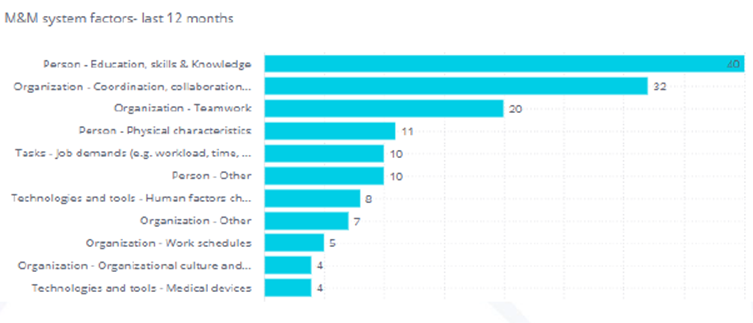
- Morbidity and Mortality (M&M) reviews, now standardised and automated
- Pre-populated case lists for clinical teams
- Integrated attendance tracking and documentation
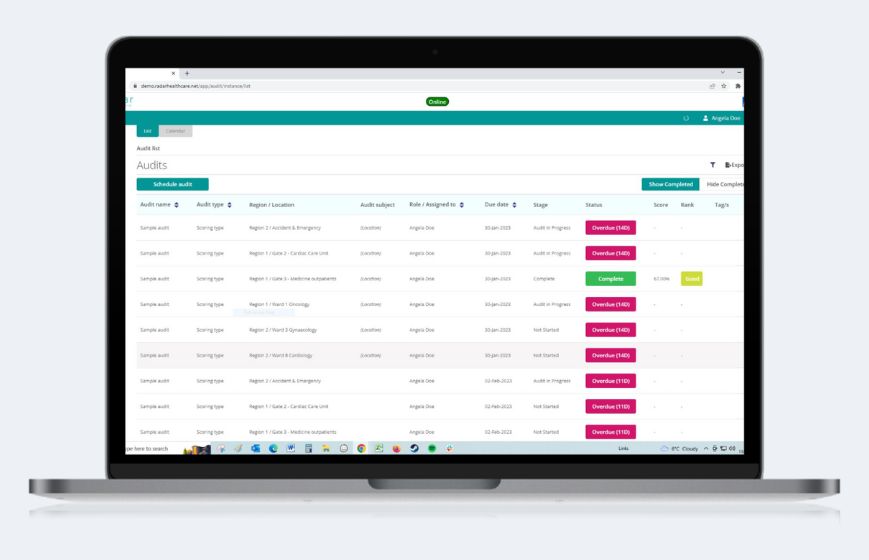
In addition, we’ve rolled out audit tools across the organisation, including:
- Observational audits
- Nursing documentation audits
- Checklist-based assessments
Feedback from staff has been positive, particularly around ease of use and access to analytics.
Streamlining communication with notices
Previously, safety updates relied heavily on mass email communications, with limited visibility of engagement.
Using Radar Healthcare’s Notices module, we’ve:
- Sent over 50 targeted notices in the past year
- Reached 30,000+ staff
- Gained clear insight into who has read and engaged with communications
This has significantly improved how we share safety information and updates across the Trust.
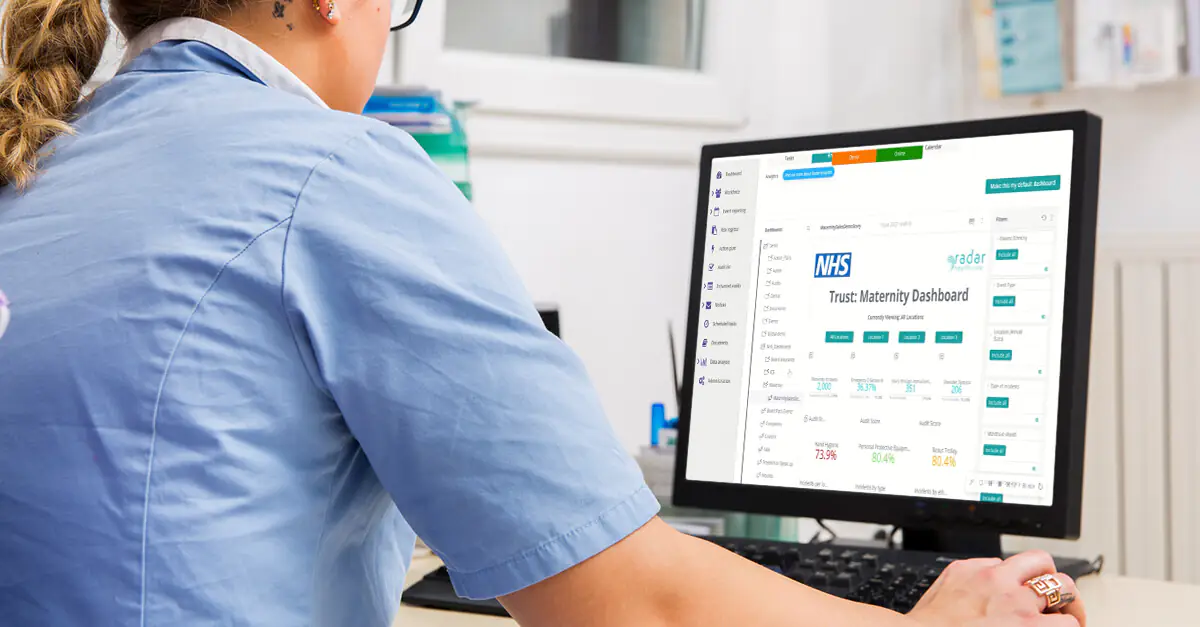
Turning data into insight
One of the biggest shifts has been moving from data collection to meaningful insight.

100+
dashboards built within Radar Healthcare

Power BI
integration for deeper analysis

KPIs
tracking response times, compliance, and trends
This feeds into our Integrated Quality Report (IQR), providing a single, consistent view of performance across the organisation, shared from operational teams through to board level.
Using AI to accelerate learning
With such large volumes of data, manual analysis isn’t practical.
We’ve started using AI tools like Microsoft Copilot to analyse narrative data, identify themes, and surface trends in seconds rather than weeks.
For example, where a spike in incidents occurs, AI can quickly:
- Identify contributing factors
- Highlight common themes
- Provide context for further investigation
This is already saving significant time and helping us respond more quickly to emerging risks.
What’s next?
Our journey continues, with several key developments underway:
- API integrations to automate data flows (e.g. mortality data)
- Expansion of audit and risk management processes
- Migration of legacy systems into a single platform
We’re also continuing to work closely with Radar Healthcare and peer organisations to refine the system, ensuring it works in practice and theory.
By bringing systems together, improving data quality, and focusing on usability, we’ve created a platform that supports safer, more informed decision-making across the Trust. And while there’s still more to do, our direction is clear.