



Vaccination UK: Scaling Risk Assessment & Auditing with Radar Healthcare
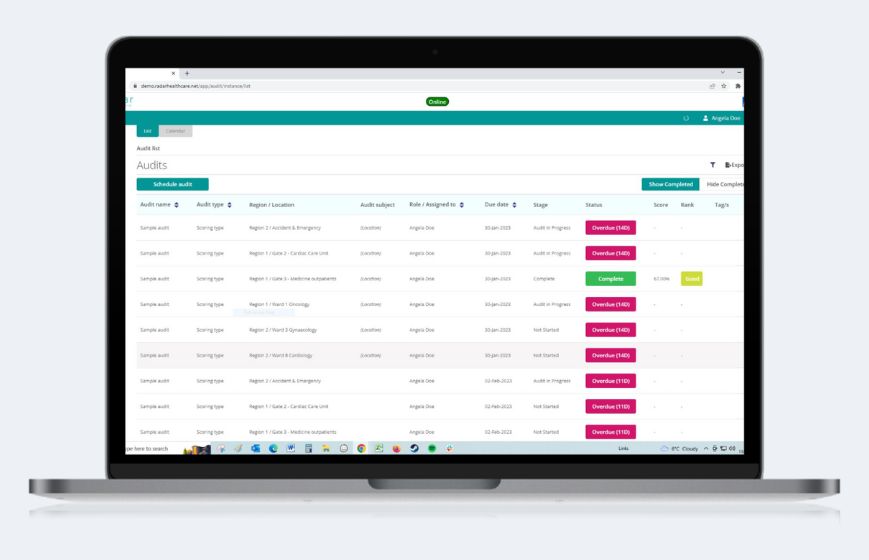
Since 2015, Vaccination UK has been commissioned by NHS England to deliver a comprehensive suite of immunisation services, from routine school-aged vaccinations through to rapid outbreak response, across its service regions. In our recent conversation with Kirsty Britton, Clinical Lead for North Yorkshire, York and Humber, we learned how the clinical teams are integrating Radar Healthcare’s quality and compliance platform. This data‑driven, agile approach is enhancing transparency, governance, and care quality reinforcing Vaccination UK’s commitment to delivering the safest and most efficient services possible.
Vaccination UK Q&A: Scaling Risk Assessment & Auditing with Radar Healthcare
Kirsty Britton, Clinical Lead for North Yorkshire, York and Humber, describes how her clinical teams are integrating Radar Healthcare’s quality and compliance platform, what that means for them, and what the future goals are.
Q: What prompted this transformation project, and what were the initial objectives?
A: Vaccination UK lacked a centralised system for governance and audit data, everything was spread across Teams forms and spreadsheets. Radar Healthcare guided the onboarding process and provided hands-on support throughout, and the outcomes have already exceeded expectations. The primary goal was simple yet crucial: ensure CQC compliance, maintain auditable and accessible records, and establish a solid framework for scalable governance.
Q: One of the new additions you introduced was a risk assessment event. What does that involve and how was this managed previously?
A: We categorise risk events such as medication errors or incidents like fainting and head injuries and conduct risk assessments before vaccinations to ensure site safety. These are now recorded in our risk register and tracked consistently across the board. Previously, this was handled via small Teams/form groups and spreadsheets, acceptable when we were smaller, but as contracts grew rapidly, that approach became overwhelmed, prompting the need for centralisation.
Q: You mentioned you had recently expanded, what regions do you now work across?
A: Yes, we operate across North Yorkshire, Humber, Lincolnshire, the Midlands, Bedfordshire, Hertfordshire, Luton, Essex, and most of London. Managing this expansion placed significant pressure on our systems, making centralisation essential. To address this, we implemented a centralised system capable of identifying trends, guiding clinical leadership, supporting HR, and shaping organisation‑wide policies effectively.
Q: How important is scalability to you, and what is your objective with the data?
A: Scalability is crucial. As we continue to grow, having robust systems is essential. The data we collect will directly inform policy, SOPs, and clinical practices helping us improve safety and operational effectiveness.
Q: How was the implementation process with Radar Healthcare’s team, and how did the training and pilot approach work?
A: The process included weekly Teams calls for goal-setting, training sessions, and a highly effective in-person workshop. Participants included clinical leads, the Clinical Director, and the CEO. Starting with a small pilot group helped avoid confusion and enabled a smoother, quicker rollout across our wider teams.
Q: How has the live system been performing and are there any benefits or insights so far?
A: The system is being fine-tuned in real time. We’ve had no significant issues; staff find the forms easy to use and workflows run smoothly. While the dashboard is still being rolled out and full reports aren’t live yet, performance and usability have been positive.
Q: Has the organisational view on risk changed and does this align with broader digital trends in healthcare?
A: Risk has always been a clinical priority. What’s changed is our ability to track and report it robustly. This robust reporting aligns well with wider digital and data trends in the sector enhancing transparency and supporting more informed service delivery.
As Kirsty explains, the next stage will involve Vaccination UK introducing live dashboards, providing real-time reporting and practical insights to support everything from policy planning to HR operations. With digital transformation becoming a nationwide focus in healthcare, Vaccination UK’s strategy stands out by promoting transparency, adaptability, and meaningful, data-driven improvements.
Request your free demo today

This site is protected by reCAPTCHA and the Google Privacy Policy and Terms of Service apply.