


The Impact of Tech and Data Reporting Across Your Care Organisation
With over 27 years of experience in healthcare, Emma Miles has built an impressive career spanning frontline nursing, care home management, and senior leadership roles in quality and operations. Now as a care consultant, Emma works with organisations to improve the way they implement technology and use data to drive positive change.
Recently, Emma joined Radar Healthcare for both a What the HealthTech? podcast episode and a live session at the Care Show in Birmingham 2024. She shared valuable insights on the evolving role of technology within health and social care, the importance of staff engagement, and how digital solutions can go beyond compliance to support real cultural and operational improvements. In this blog, we explore some of the key takeaways from the conversation, offering practical steps that care providers can implement in their own organisations.
Watch the full podcast episode ▶️

Staff Voices Matter: Technology Should Work for Your Team
One of Emma’s strongest messages was the importance of ensuring technology works for the people using it daily:
“You have to have that input and feedback from the staff that are using it on the floor. There would be nothing worse than having an amazing system, all singing, all dancing, but actually, staff don’t feel confident using it – because then that’s just counterproductive.”
A common mistake a lot of organisations make is implementing a new system without consulting those who will be using it most. Whether it’s nurses, carers, or administrators, their feedback is crucial in shaping a system that enhances their workflow rather than adding to their workload.
To ensure a successful technology implementation, engage all internal stakeholders early to identify the key challenges they need to address. Regularly gather feedback and refine systems and processes to meet evolving needs. Clear, straightforward training and communication are also essential to drive adoption and maximise engagement.
Simplicity Is Key to Adoption
“Sometimes people can be afraid of technology. So, I think getting that feedback, keeping it simple, breaking down the tasks – it really helps embed the system into practice.”
Many employees in health and social care settings may not be highly tech-savvy. If a system feels complicated or overwhelming, adoption rates will drop, and the benefits of the technology will be lost.
A successful technology rollout starts with making systems intuitive and user-friendly, ensuring that staff feel confident using them. Training should be broken down into manageable steps to prevent overwhelm and encourage adoption. Additionally, incorporating in-system prompts and automation can guide staff through processes, reducing errors and reinforcing best practices in real time.
Emma continues:
“Have a smaller team of champions who can test the system, give feedback, and then help roll it out to the wider organisation. That way, when it’s launched, you already have staff who are confident in using it.”
Data Is Powerful – If You Can Use It
“There’s no point gathering the data if you then can’t analyse it and do something good with it.”
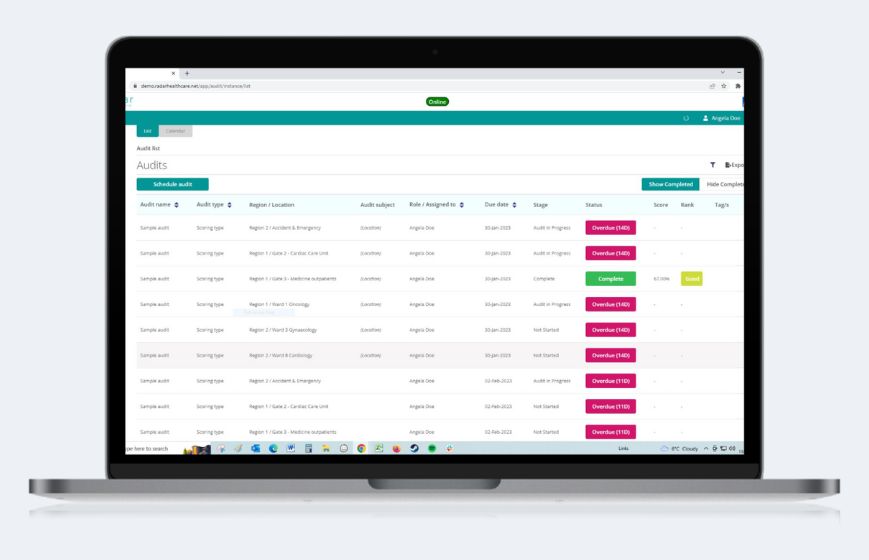
Care organisations collect a vast amount of data, but without proper analysis, it’s just numbers on a screen. Radar Healthcare’s technology ensures that this data is actionable, helping to track trends, prevent incidents, and improve care quality.
To make the most of technology, invest in tools that provide real-time insights rather than just raw data. Regularly reviewing analytics helps identify trends, allowing organisations to make proactive decisions that improve outcomes. Additionally, leveraging data effectively can support compliance and drive best practices across the organisation.
“Another game-changer has been Radar Healthcare’s bespoke dashboards. Before, we were extracting data into spreadsheets - it was just numbers on a page. Now, the dashboards bring that data alive, making it easier to analyse trends, benchmark performance, and even prevent issues before they happen. Managers who once had to sift through spreadsheets now have clear, actionable insights at a glance.”
Reducing Workload and Empowering Staff
A major benefit of implementing Radar Healthcare has been reducing the burden on managers and empowering staff with confidence.
“One of the biggest advantages of Radar Healthcare has been its ability to centralise everything into one system. Previously, managers had to juggle safeguarding logs, complaints records, accident forms, and investigation templates—often scattered across different systems or paper files. This made it difficult to track events and ensure nothing was missed. With Radar Healthcare, everything is in one place. The system allows incidents to be logged in real-time by staff on the floor, with all supporting documents, investigations, and follow-ups attached. Managers now have full oversight – from the initial report through to resolution – giving them confidence that nothing is slipping through the cracks. If a safeguarding concern is raised or an accident requires investigation, all the necessary information is readily available, eliminating the need to sift through multiple records. The ability to capture and manage incidents in a single platform has been a game-changer, streamlining processes and improving accountability across the board.
Moreover, we saw a real shift in how our teams operate. For instance, managers told us that the number of out-of-hours calls from staff checking things had significantly reduced. Staff now feel confident they’ve completed everything correctly, thanks to the system’s prompts and structured workflow. Previously, they might have called late at night, worried they’d missed something, but now they have the reassurance that all necessary steps have been followed. It wasn’t something we initially set out to solve, but it ended up being one of the biggest benefits.”
By leveraging technology to streamline workflows, organisations can reduce administrative burdens and free up more time for delivering high-quality care.
Looking Beyond Compliance: Radar Healthcare’s Broader Impact
Emma’s organisations initially adopted Radar Healthcare for compliance and risk management but soon realised its potential beyond that.
“For me, the real ‘lightbulb moment’ came when I realised Radar Healthcare could do more than just compliance. I was presenting at a conference about the new CQC evidence categories when a Radar Healthcare team member said, ‘We could do something with that.’ That’s when it clicked - we could use the system to capture positive feedback too. Within two weeks, we had built new feedback events for residents, relatives, and staff, introduced QR code posters to make it easy for people to share their experiences, and set up dashboards to track trends. It completely changed how we dealt with feedback. What started as a compliance tool became a way to celebrate excellence and drive positive change too."
This insight led to more innovation and allowed the organisation to start using Radar Healthcare to manage internal award nominations and increase engagement and recognition internally too.
Conclusion: A Smarter, More Empowered Future
Compliance and governance technology in health and social care should be about more than just compliance – it should empower staff, reduce workload, and improve outcomes. As Emma says:
“We always focus on what we haven’t done yet and what still needs improving. But actually, let’s celebrate the positives as well. Let’s recognise what’s working and amplify that excellence across our organisations.”
By engaging staff, simplifying technology, making data actionable, and embracing innovation, providers can create a smarter, more efficient, and more positive working environment.
Final takeaways:
- Involve staff in technology decisions to ensure successful adoption.
- Keep systems simple and user-friendly.
- Use data not just for compliance, but for proactive improvements.
- Reduce manual workload with automation and clear workflows.
- Look beyond risk management – technology can help recognise excellence too.
Emma’s insights from the podcast and Care Show session serve as a roadmap for organisations looking to harness technology for better care. The future of healthcare technology is about working smarter, not harder – and ensuring that staff, residents, and organisations all benefit from the digital transformation.
Listen here