


Customer Spotlight: St Nicholas Hospice Care
At St Nicholas Hospice Care, the commitment to delivering safe, high-quality care is matched by a drive to innovate and improve. In partnership with Radar Healthcare, the organisation has embraced technology to transform governance, streamline processes, and empower its teams with real-time insights – ensuring patients remain at the heart of every decision.
From the onset of Radar Healthcare and St Nicholas Hospice Care’s partnership, it was evident that technology had the potential to enhance their governance. However, selecting a system that suits everyone can be challenging. Michael shares why Radar Healthcare is his top choice: “I attended many expos in London showcasing technology, and it has evolved rapidly over the years. It has become much more user-friendly and intuitive. The interfaces are now quite simple and straightforward. Other legacy systems, on the other hand, retained a rather old-fashioned design that appeared overly technical and weren’t easy to navigate for most people. In contrast, when Radar Healthcare emerged, the immediate impression was its high user-friendliness. Its web-based format looked modern and accessible from anywhere without needing installation or technical support for implementation. For me, having such an efficient compliance system was fantastic. I appreciated having a centralised location for all our needs without requiring specialist knowledge to operate it.”
Discover more about how the teams successfully embedded Radar Healthcare and the milestones they achieved along the way below.
Summary of Achievements
-
Increased Automation
Processes have been automated, improving efficiency and oversight.
-
Improved Wellbeing
Safety huddles and training plans are informed by live insights, promoting continuous learning and improved staff wellbeing.
-
Full Visability
There is now full visibility of events, risks, and concerns on the ward, enabling clinical teams to understand where risks exist and where improvements are needed.
-
Real-time Reporting
Clinical teams can adapt forms and reports in real-time, ensuring that the data collected is utilised in the best possible way.
-
Interconnected Modules
Policies, incidents, and auditing processes are now interconnected, ensuring consistency in the data collected.
-
Reduction in Admin Time
Reports are generated automatically, enabling more time to be spent analysing the data and less time on creating the report documents.
-
Everything in One Place
By continually striving for improvement while recognising and sharing successes, having all necessary information in one place has proven crucial. This centralisation supports effective planning and fosters a more cohesive, outcome-focused approach.
The Single Biggest Impact: Automation
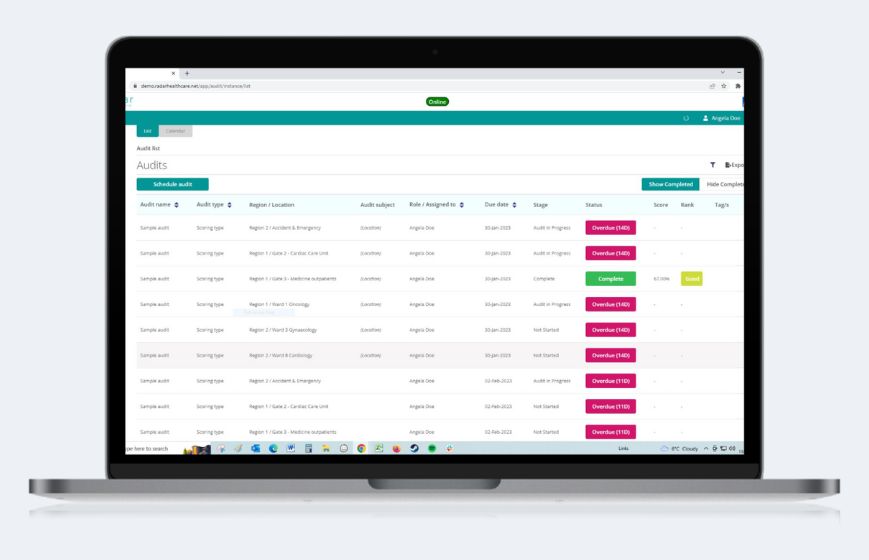
The primary benefit for St Nicholas Hospice Care wasn’t merely reducing paperwork, but the automation of tasks. It directs everyone to a centralised location to manage their duties, whether it’s incidents, DPIs, or the Caldicot log. Users select their tasks from one consolidated list, and the process flows effortlessly without needing additional guidance because the system handles it all.
“This is where I believe Radar Healthcare truly proves its value. It goes beyond simply converting a paper form into a digital format, which can be done easily enough. For me, the automation is what makes it special. When someone completes the Data Protection Assessment (DPA), it’s just the beginning; I get notified immediately and can authorise it without further involvement. The entire process runs smoothly through automation, which is what makes it an efficient system. It’s not just about making a form paper-light; it’s about ensuring the system manages itself once data is entered. There’s no need to constantly oversee it; you only make occasional adjustments for improvement.” Michael Pollington, Corporate Governance Manager & IG Lead, Data Protection Officer at St Nicholas Hospice Care

As Michael further explains, they implemented the same approach for legitimate interest assessments, Caldicot log, and other clinical requirements that need documentation. Logs for CCTV usage were included as well. Previously, using CCTV required multiple paper forms approved by different people. Now, if members of the team need to use it, the form provides reasons for its usage and requires them to declare their actions. Michael will receive an email notification saying it’s on Radar Healthcare so he can verify it and note the legal justification for checking the CCTV footage – a process made simple by automation.
The Invisible Safety System
Michael regards Radar Healthcare as an “invisible safety system”. Incidents are logged and reviewed during safety meetings that keep the Clinical Director and Head of Nursing and Quality well-informed about current matters within the hospice environment. Similarly, Ward Manager Natasha gains pertinent insights for her role. Prior to adopting this organised process, updates were infrequent – you couldn’t always get a clear picture of ongoing activities or issues – but now information flows smoothly into a consolidated platform for more efficient reporting purposes.
Vital checks like those for ulcers or falls are made readily accessible alongside analyses of other trends such as medication-related events, leading to newly introduced learning sessions for ward staff that weren’t available before Radar Healthcare’s adoption.
A major success for St Nicholas Hospice Care has been translating data from Radar Healthcare into actionable insights and lessons learned across the organisation. Michael notes that Ward Manger, Natasha has excelled particularly well in this domain.

“What stands out is how Natasha manages this without insisting on being entirely paper-free, which is commendable. She explores different ways to communicate her message effectively - be it through write-ups, posters, huddles, adding extra details or even informal discussions over lunch. Many assume digitising information means it can be ignored thereafter. What’s crucial here is they've used the system proactively, gathering data and discussing it in meetings while contemplating how best to implement findings practically for patient benefit.”
Natasha provides more details about her approach: “While we’re great at logging incidents on Radar Healthcare and diligent in investigating them, we initially found it challenging to relay this information back to our team effectively. We aimed to keep communication succinct and avoid making it appear accusatory towards individuals. The goal was collective growth and understanding. At the conclusion of a Radar Healthcare process, there’s a section for lessons learned. These observations are collected into a quarterly publication called “Lessons Learned from Radar Healthcare”, which offers condensed pieces of advice focusing on future improvements rather than detailing every event’s specifics – delivering clear guidance for team progression. This strategy has greatly enhanced effective feedback distribution; without it, staff might undervalue these reports and feel demotivated if no individual benefit is seen. By assessing these insights, we can better identify our upcoming training needs based on emerging patterns.”
Transforming Clinical Efficiency
As Head of Nursing and Quality, Pippa explains the impact on herself and the clinical teams: “Radar Healthcare has been instrumental in helping us save time and improve our overall effectiveness. One of the key advantages we’ve found is its usefulness in onboarding new staff members. This year, we’ve expanded our bed capacity, resulting in a significant number of new employees joining us. Radar Healthcare has proven to be highly effective for inductions because it serves as a central hub for all necessary information. Staff can now access policies, report incidents, conduct audits, or upload patient feedback for CQC quality statements -all from one place. This consolidation simplifies processes for staff, which I fully support.
From a management perspective, we are increasingly focusing on using the dashboards to track trends and generate reports. For instance, we can monitor patterns such as the timing of patient falls. This analysis helps us identify any recurring themes, one such example was an increase in falls happening during MDT meetings, which indicated the need for additional staff on the ward while others attend the meeting. Previously, reviewing such data involved going through numerous paper reports to pinpoint details like the time of incidents. Radar Healthcare streamlines this process, making it easier and quicker to gather insights. This supports both quality improvements and patient safety measures.”

"Every Monday, we meet to review incidents from the previous week, out-of-hours calls, and any safeguarding concerns. During these meetings, we use Radar Healthcare on-screen to provide a clear overview of the week’s events and plan accordingly for the week ahead. We can easily generate a report covering all incidents from the previous week, which enhances our efficiency. Radar Healthcare replaces the reliance on paper records, allowing us to access information more quickly and in greater detail. This means that when planning and implementing changes, we have a stronger evidence base to work from. It’s also important to ensure staff understand the reasons behind any changes being made, as they are more likely to support and adapt to them when the purpose is clear. The platform makes it easier to share relevant information with colleagues, further supporting effective communication and decision-making.”
Empowering Safer, Smarter Care Through Technology
The journey of St Nicholas Hospice Care with Radar Healthcare is a testament to the power of purposeful technology in healthcare. By embracing automation, improving accessibility, and fostering a culture of continuous learning and collaboration, the organisation has not only enhanced its governance but also strengthened the quality of care provided to patients. From onboarding new staff to proactively identifying risks and opportunities for improvement, Radar Healthcare has become an essential part of daily operations. Most importantly, it has empowered clinical teams to make data-driven decisions with clarity and confidence – ensuring safer, smarter, and more responsive care for those who need it most.
In summary, and as, Advanced Clinical Practitioner, Daisy explains, “Radar Healthcare not only helps in maintaining a clear governance trail but also aids in the efficient management and investigation of incidents. It streamlines access to critical information, supports our review and update processes, and ensures that staff are guided to the appropriate documents for their needs. This all contributes to a more organised and effective approach to incident management and governance.”

Find out more