


Governance that scales with ambition: how Splendid Care is building oversight for entirely new models of care
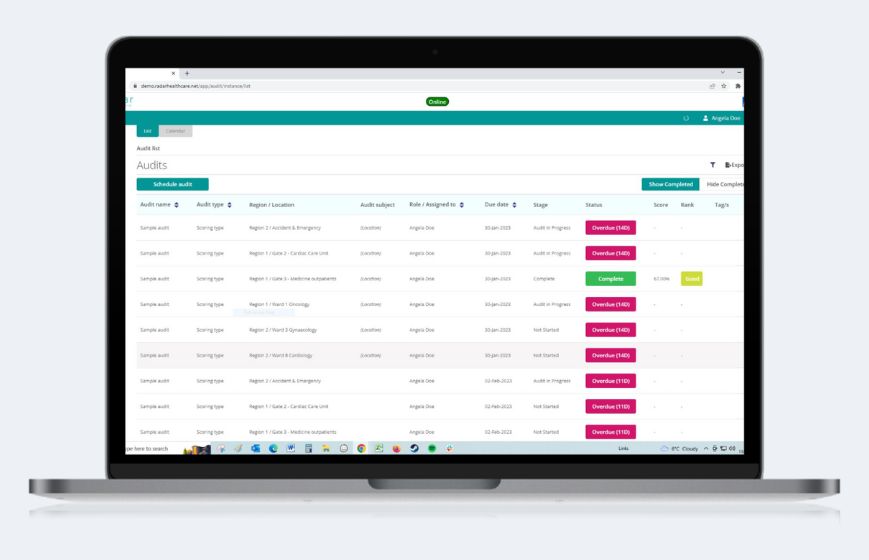
Splendid Care is using Radar Healthcare to build clear, scalable governance across ambitious new models of care, including dementia villages, specialist acquired brain injury units, and care homes within tower blocks. By turning incident data, trends, and learning outcomes into meaningful insight, Radar Healthcare helps Splendid Care give boards, regulators, and frontline teams the context they need to improve care quality, evidence continuous improvement, and support innovation with confidence.
Governance that scales with ambition: how Splendid Care is building oversight for entirely new models of care
Splendid Care isn’t a typical care group. It sits inside a hospitality company that also owns two five-star hotels in London, the only five-star hotel in York, and a restaurant portfolio that stretches from high street chains to quick-service brands. The whole business is owned by one individual, and the board Antony Hall, Managing Director of Care at Splendid Care, reports into knows hotels and restaurants far better than it knows care.
That’s the backdrop to a growth plan most care groups would call ambitious and Antony calls normal Tuesday planning. Splendid Care has 18 developments in progress. New elderly care homes running 100 to 120 beds each. Two specialist acquired brain injury units. Hydrotherapy going in across every site. A dementia village on a 12-acre plot, built on the Danish and Finnish models rarely seen in the UK. And three care homes built inside 24-storey tower blocks in London, where the first ten floors will be a care home and the rest will be something else entirely.
Antony joined Splendid Care after a career that included time as a CQC regulator and a spell running governance across 328 homes and 18,000 residents at one of Europe’s largest care providers. He came in with strong views on what good governance looks like, and a clear line he wanted to hold:
“I’ve long been an advocate of using any compliance software, but particular Radar Healthcare, to move away from that tick box compliance approach just to satisfy CQC, to actually how do we use pieces of software to really gain the insights that we need to improve resident outcomes, from which CQC compliance will come.” Antony Hall, Managing Director of Care, Splendid Care
The problem with reporting up
Two things sit at the centre of Antony’s challenge, and neither of them is really about the data itself. The first is his board. Show a hospitality board a spike in falls or safeguarding concerns with no context, and you’ll get a reaction built for a different industry.
“If they see a high number of wounds, or a high number of safeguarding, or a high number of falls, potentially the context around that is really important, because to a non-care professional, that could look terrifying.” Antony Hall, Managing Director of Care, Splendid Care
The second is regulators, and this one surprised him. He’d assumed that after years walking into hundreds of homes as a CQC inspector, he understood what regulators needed. What he found instead was that even experienced regulators lack the day-to-day context that people running a home take for granted.
“I can see all the information, I can get a feel from the home when I walk in, I can review all the documentation. But what is so difficult to get is the context.” Antony Hall, Managing Director of Care, Splendid Care
Now stretch that same challenge across a dementia village where residents walk freely between a shop, a bakery, a cinema, and their care staff, rather than staying in numbered rooms. Or across ten floors of a tower block that CQC has never been asked to register before. Splendid Care needed a way to govern models of care that don’t fit the traditional shape, and to do it convincingly enough that CQC would say yes to something new.
Making the case for context, not just numbers
Radar Healthcare’s role, as Antony describes it, isn’t to collect more data. It’s to turn what’s already being recorded into something a board or a regulator can actually act on.
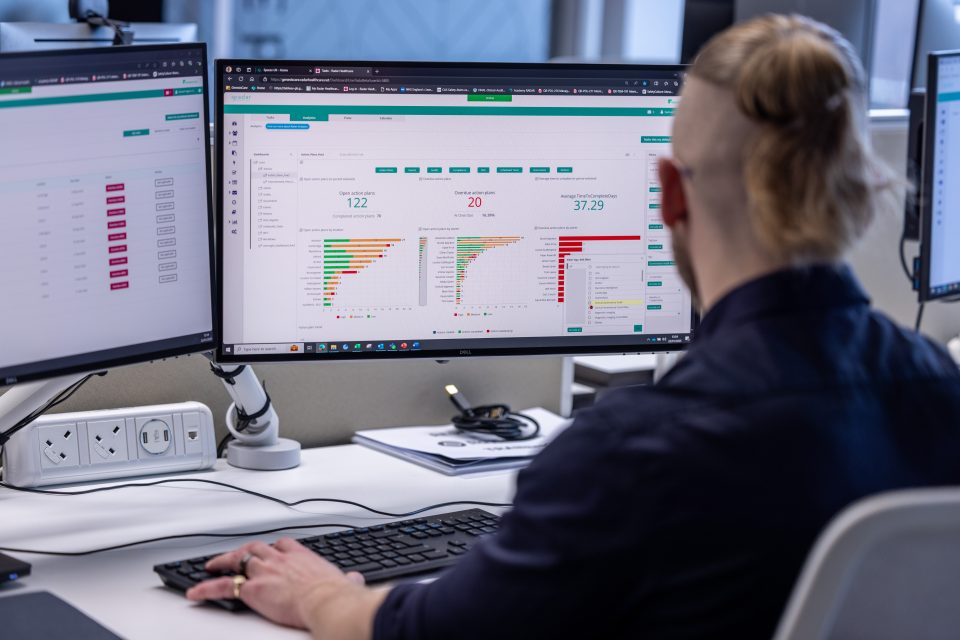
The analytics and trend reporting let Antony track performance on the things that matter, wound healing, falls management, repeat incidents, without presenting raw counts that invite panic.
“The way that we can use Radar Healthcare’s analytics to present the context around that, the trend analysis, the way that we can use pulses to track those kind of things, that’s really quite powerful in how you present that information to a non-care board.” Antony Hall, Managing Director of Care, Splendid Care
But the feature he keeps coming back to is learning outcomes. As a former regulator, Antony says the number of incidents was never what told him whether a home was safe. It was whether the home was learning from them.
“It’s the learning that’s really important, because that’s what drives the continuous improvement. If you can link that learning outcome to a continuous improvement cycle, I think that’s incredibly valuable for a regulator. But it’s also valuable for external stakeholders, whether they’re a private equity company, a commissioner, or in my case, just a single owner.” Antony Hall, Managing Director of Care, Splendid Care
That thinking now runs through how Splendid Care operates day to day. Weekly learning meetings across every home and service, and at senior team level, pull together what’s coming out of Radar Healthcare and other systems, then feed it straight back to care staff. Antony has watched this build momentum before, having led the same shift at a 23,000-strong staff organisation earlier in his career. Once frontline teams could see that their recording was driving real improvement rather than just satisfying a KPI, the quality, timeliness, and volume of what they recorded all improved with it.
It’s also become part of how Splendid Care is having its conversations with CQC about the dementia village and the tower block homes. The regulator won’t register a model it can’t see clearly governed, and Splendid Care has spent recent months building exactly that case.
See how leading care groups are improving visibility and oversight
If your care organisation is growing and you need a better way to:
🔍 Spot hidden trends
⚙️ Satisfy stakeholders
📊 Scale without friction
Listen to Antony Hall and Daniel Grant talk about this in our Visibility Advantage webinar.
What good governance looks like when you’re this different
Antony’s advice to anyone evaluating a governance platform, particularly if they’re scaling into services that don’t look like a traditional care home, comes down to three questions he asks every supplier and asks himself.
Can the system flex to match how your services actually work, rather than forcing your services to match the system. Is it genuinely transparent floor to board, so a home manager and a board member are seeing the same picture at their respective levels. And is it easy enough for frontline staff to use that the data going in is actually good.
On the point about integration, he’s blunt: don’t get too hung up on needing one system for everything.
“Integration between systems is now easy. It always has been and it still is. I think that’s a little bit of a red herring, to be quite honest.” Antony Hall, Managing Director of Care, Splendid Care
What matters more, in his view, is picking the best tool for each job and making sure the interface behind it is simple enough that staff barely notice they’re moving between systems at all.
For Splendid Care, that means Radar Healthcare sitting above the care planning and clinical systems already in place, connecting incidents, audits, and actions that would otherwise live in separate places, while giving Antony the one thing a business built on hospitality instincts and care expertise both need: a clear, honest, and constant picture of what’s actually happening across every home, village, and tower block floor they run.