


Earth Day 2026: The Importance of Sustainability in Improving Patient Safety

Today marks Earth Day 2026, and this year’s theme ‘Our Power, Our Planet’ highlights the importance of collective responsibility in protecting the environments in which we live and work. In health and social care, that responsibility extends beyond environmental impact and directly into improving patient safety outcomes.
The conditions that support patient safety and sustainable practice are not separate. Both rely on the same foundations, with systems that are reliable, consistent, and designed to support high-quality care. When these systems are strong, organisations are better equipped to protect patients, support staff, and deliver safer, more reliable care every day.
At Radar Healthcare, we recognise that sustainability is integral to the long-term improvement of patient safety. Our platform brings essential safety and quality processes into a single, integrated system to capture reliable data, improve visibility, and ensure that critical information is accessible and actionable when it matters most.
By supporting consistent processes and enabling organisations to identify risks earlier and maintain improvements over time, Radar Healthcare helps create health and social care environments where care can be delivered sustainably, and ultimately, improve patient safety outcomes.
Why Sustainable Systems
Support Safer Outcomes
Patient safety relies on systems that are reliable, consistent, and are easy to use. When processes are fragmented or information is spread across multiple platforms, staff are required to navigate unnecessary complexity at a time when pressure is already high. Over time, this contributes to inconsistency, increases the likelihood of harm, and makes it harder to maintain safe practice across services.
Sustainability helps address these challenges by creating ways of working that increase usability and maintain every day. Sustainable systems support clarity across organisations and make information more accessible, supporting clearer decision-making and earlier visibility of emerging risks. By removing the need for workarounds and enabling the same processes to be followed consistently, systems can provide greater stability for teams and strengthen patient safety.
This shows how sustainability and patient safety are closely connected. When systems are designed to support long-term use without placing additional strain on people or resources, they contribute to environments that are built to improve care outcomes.
How Radar Healthcare Brings
Sustainability and Patient Safety Together
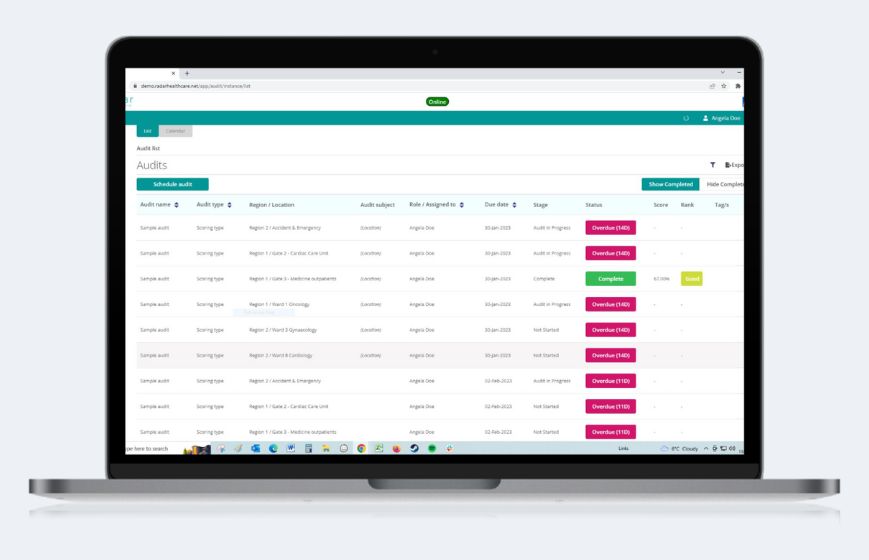
Radar Healthcare strengthens the link between sustainability and patient safety by bringing key safety and quality processes into one place. With incidents, audits, risk management, and events connected in one platform, organisations gain consistent and reliable data that highlights emerging risks, and areas where inconsistencies exist.
 Alongside this, we support organisations to embed continuous improvement in patient safety across their services, helping to deliver meaningful and lasting impact. This is reflected in the outcomes achieved by our partners, with 91% of participants in our 2025 NPS survey reporting improvements in quality and performance following implementation of Radar Healthcare. In addition, our partners have seen patient feedback increase by more than 3,000%, while audit completion rates have reached 90%, supporting stronger oversight and consistency across patient safety reporting. This has led to 90% of sites now being rated Good or Outstanding by the CQC, up from 70% in 2020.
These results demonstrate how embedding consistent and reliable processes can support a more sustainable approach to patient safety. By improving oversight, streamlining workflows, supporting organisational learning, and reducing administrative burden, organisations are better equipped to deliver safe care and improve patient outcomes.
Sustainability as a Requirement for Future-Safe Care
As the health and social care sectors continues to evolve, sustainability has shifted from a future aspiration to an essential part of delivering safe and reliable care. Organisations are expected to maintain high standards while navigating increasing demand, regulatory complexity, and sustained workforce pressures.
Responding to these challenges requires more than short-term adjustments, it depends on systems and processes that can continually support consistent practice over time without introducing additional strain or complexity for staff.
Within this context, sustainability is central to strengthening patient safety. Approaches that reduce inefficiency and support clearer ways of working help ensure that the structures underpinning safe care remain steady, adaptable, and capable of meeting future demands, providing a clearer foundation for improving patient safety, now and into the future.
This Earth Day should serve as a reminder that sustaining the systems behind improved patient safety is just as important as sustaining the environments in which that care takes place.