


Don’t miss out on funding for digital consent

Making pathway transformation count:
beyond access, towards better outcomes
The latest NHS England investment in referrals and appointments marks another important step forward in elective recovery.
But the focus of this funding goes beyond reducing waiting times. It reflects a broader shift towards transforming pathways, improving consistency and delivering measurable improvements in patient outcomes.
For organisations aligned to GIRFT priorities, this creates a clear opportunity to rethink not just how quickly patients move through the system, but how safely and consistently care is delivered at every stage.
Transforming pathways, not just digitising processes
The 2026 to 2027 Referrals and Appointments fund is focused on pathway transformation.
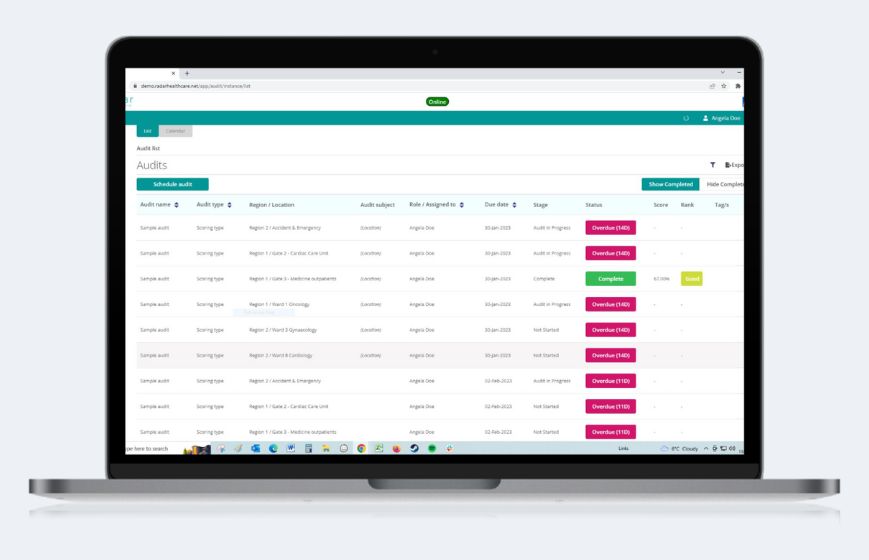
Radar Healthcare’s digital consent solution, uniquely powered by gold standard EIDO Patient Information, enables NHS trusts to digitise patient engagement, standardise GIRFT aligned pathways and deliver measurable improvements in safety, efficiency and elective recovery.
Fully aligned to NHS App and e Referral Service ambitions, it provides a connected, patient centred approach to pathway transformation.
With funding deadlines approaching, now is the time to act.
Interested in funding? Time to act
NHS England’s £15 to £20 million Referrals and Appointments Transformation Fund for 2026 to 2027 is designed to support digital pathway transformation across priority areas.
Offer 3a focuses specifically on standardising GIRFT and Elective Care Programme pathways where digital innovation can deliver measurable impact.
Bids close on 31st May 2026 and require discussion with regional teams ahead of submission, so early engagement is essential. The application form can be accessed here.
For many organisations, this may be the point at which long-standing priorities, such as digital consent, become achievable.
Why transformation needs to go deeper
While improving access remains critical, speed alone does not address variation in care.
GIRFT has consistently highlighted that variation in pathways leads to variation in outcomes. One of the most underexplored areas within this is how patients experience and understand their care.
Across many organisations, challenges persist:
- Limited visibility of patient understanding at the point of consent
- Inconsistent approaches to communicating risk and treatment options
- Communication-related issues that contribute to harm but are not always captured
- Fragmented data across consent, incidents and wider governance
Without addressing these areas, pathway transformation risks being incomplete.
A different perspective on digital consent
At Radar Healthcare, digital consent is not viewed as a standalone process.
It is part of a wider commitment to quality, governance and learning across the patient pathway.
Radar Healthcare puts quality at the heart of governance, with compliance as the outcome, not the objective.
By connecting consent with risk, incidents and assurance, organisations gain a more complete understanding of where variation exists and how it can be reduced.
Why bids involving Radar Healthcare are well aligned
This funding creates an opportunity to move beyond incremental improvement and take a more strategic approach to pathway transformation.
Bids that include Radar Healthcare are strongly aligned to the programme’s objectives.
✅ Supporting GIRFT priorities
Standardised consent pathways help reduce unwarranted variation and embed best practice across services.
📊 Delivering measurable outcomes
Organisations gain insight into patient understanding and communication-related risk, supporting evidence of real improvement.
🛡️ Strengthening governance
A single platform connects consent, risk, incidents and compliance, providing clear oversight and assurance.
🔄 Enabling continuous learning
Data is transformed into actionable insight, helping teams improve pathways over time rather than in isolation.
🚀 Designed for delivery
Our approach supports scalable implementation within required timeframes, helping organisations move quickly from plan to impact.
In addition, Radar Healthcare is designed to support demonstrable in-year benefits through rapid deployment. Standardised API integration with EPR and PAS systems, proven NHS rollout experience and the ability to quickly digitise the patient experience mean organisations can begin to see pathway impact within the funding year.
Supporting your application
Developing a compelling bid requires more than outlining technology. It depends on clearly demonstrating how investment will deliver meaningful, measurable change.
We work with organisations to:
- Shape a strong, GIRFT aligned narrative
- Define clear outcomes linked to safety, quality and efficiency
- Map organisational priorities to funding criteria
- Support regional discussions and submission preparation
Our focus is on helping you translate opportunity into impact.
Making funding work harder
This funding represents an opportunity to improve more than access.
It is a chance to strengthen the quality of patient pathways, improve consistency and deliver safer outcomes at scale.
Radar Healthcare puts quality informed, patient centred pathways at the heart of governance, unifying consent, risk and insight to turn data into learning and deliver safer outcomes at every step.
Start the conversation
With bids closing at 23:59 on 31 May 2026, and NHS England requiring discussion with your regional team ahead of submission, early action is essential.
Our team can help you prepare a clear bid outline to support those initial conversations, and work with you through to full submission, ensuring your proposal is aligned to GIRFT priorities and demonstrates measurable impact within the funding timeframe.
Complete our quick contact form below.