

Proposed CQC changes for 2026: the return of KLOEs and what it means for providers
The Care Quality Commission (CQC) has announced proposed changes to its inspection approach, signalling a shift back towards a more recognisable and practical framework. Central to these proposals is the return of Key Lines of Enquiry (KLOEs), alongside a renewed focus on observing care, speaking with people who use services, and reducing the administrative burden on providers.
While these changes are currently out for consultation, they represent a significant direction of travel and are likely to shape how services are inspected from 2026 onwards. Below, we break down what’s being proposed and what providers should be thinking about now.
What has the CQC proposed?
The CQC’s proposals aim to simplify inspections, improve consistency, and focus more clearly on the quality and safety of care.
Key proposed changes include:
- The return of KLOEs, reducing the framework from 34 Quality Statements to 24 Key Lines of Enquiry
- Shorter, clearer inspection reports, with less narrative duplication
- Greater emphasis on care delivery, rather than written policies
- Removal of scoring, with clearer judgements at Key Question level (Safe, Effective, Caring, Responsive, Well-led)
- Reintroduction of Good and Outstanding characteristics, clarifying what high-quality care looks like in practice
- Sector specific frameworks, covering Adult Social Care, Mental Health, Primary and Community Healthcare, Secondary and Specialist Healthcare
In essence, the CQC is aiming to rebalance inspections away from paperwork and back towards lived experience and professional judgement.
“The proposed return of KLOEs is a positive and practical step. Many providers have struggled to navigate the complexity of The Single Assessment Framework and Quality Statements, and this shift helps refocus inspections on what really matters – safe, personalised care that people can see and experience, not just read about in documentation.”
From Quality Statements back to KLOEs: what’s changing?
Feedback from providers on the introduction of the Single Assessment Framework and the new Quality Statements highlights that the changes have added complexity, with many organisations finding them challenging to interpret and navigate.
Under the proposed model:
- KLOEs will once again form the backbone of inspections
- Quality Statements won’t disappear entirely but are expected to act more as prompting questions, supporting the KLOEs rather than replacing them
- Inspectors will make judgements at Key Question level, rather than aggregating scores
This shift should bring greater clarity for providers, particularly those familiar with earlier CQC frameworks, and reduce the need to “map” large volumes of evidence across multiple statements.
A stronger focus on observation, not administration
One of the most significant aspects of the proposals is the emphasis on how care is experienced in practice.
The CQC has indicated that around 80% of inspection activity will focus on observation – including:
- Watching care being delivered
- Speaking with people who use services and their families
- Talking to staff about how care is provided day-to-day
Documentary evidence and policies will still matter, but they are expected to play a supporting role, rather than being the primary basis for judgement.
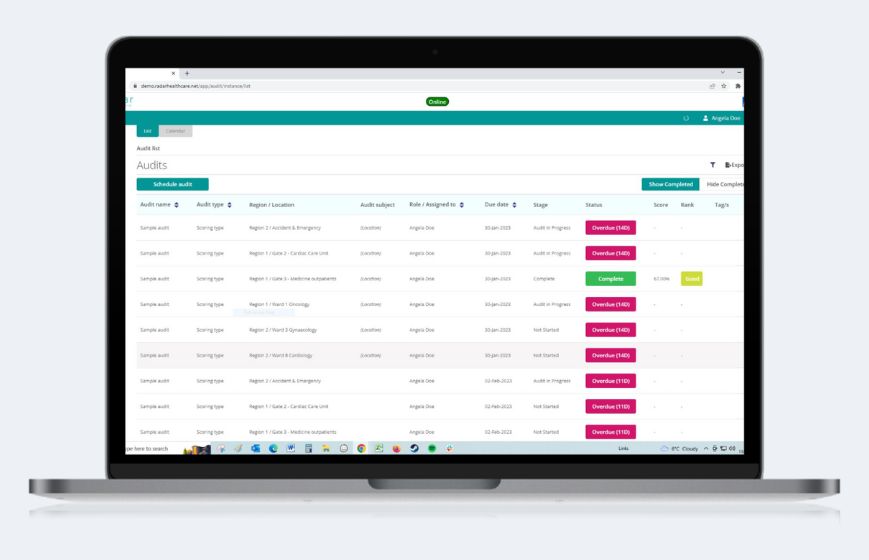
For providers, this reinforces an important message: good care needs to be visible, consistent, and understood by staff at all levels. Radar Healthcare’s observation and feedback dashboards are already designed to support exactly this, helping teams evidence and demonstrate quality in a clear and structured way.
Sector-specific frameworks return
Another welcome proposal is the reintroduction of sector-based frameworks, moving away from a one-size-fits-all approach.
This should allow inspections to better reflect:
- The realities of different care environments
- The needs of specific service user groups
- The operational challenges unique to each sector
For providers, this could mean more relevant inspection conversations and a clearer understanding of what “Good” looks like within their specific type of service.
What providers should be thinking about now
Although these changes are still proposed, they give a strong indication of where inspections are heading. Providers can begin preparing by:
1. Refocusing on lived experience
Ensure good care can be clearly seen, heard, and felt by people using services and visitors.
2. Supporting staff confidence
Staff should understand why they deliver care in certain ways, not just how to complete tasks.
3. Reviewing inspection readiness
Move away from “evidence-heavy” preparation and towards demonstrating strong, consistent practice.
4. Re-engaging with KLOE-style thinking
Even informally, thinking in terms of Safe, Effective, Caring, Responsive and Well-led will help teams align with the proposed approach.
We’ll continue to monitor developments
The CQC’s proposals are subject to consultation, and some details may evolve before implementation. However, the overall direction is clear: simpler frameworks, clearer expectations, and a renewed focus on real care quality.
We will continue to monitor updates from the CQC and share practical guidance to help providers stay prepared, confident, and inspection-ready.
If you’d like support understanding how these proposed changes may affect your service, or help preparing for future inspections, our team would be happy to help.